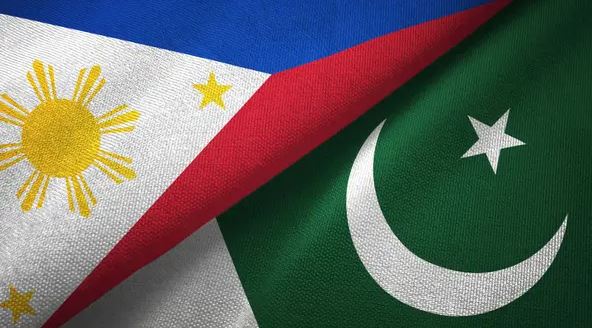
For Pakistani business leaders looking toward Southeast Asia, the Philippines offers a promising and welcoming market. It is a large, English-speaking, consumption-driven economy with more than 110 million people, a young and skilled workforce, a strong services sector, and expanding opportunities in trade, tourism, education, digital services, infrastructure, halal industries, and consumer markets.
For the Philippines, Pakistan is likewise an important and valued economic partner. It is one of South Asia’s major markets, with long-established strengths in rice, textiles, pharmaceuticals, surgical instruments, sports goods, agriculture, information technology, logistics, and entrepreneurship. Its commercial centers — Karachi, Lahore, Islamabad, Faisalabad, Sialkot, Gujranwala, Multan, and others — represent a broad and dynamic business landscape.
The Philippines and Pakistan are not new partners. The two countries established diplomatic relations in 1949, and in 2024 marked the 75th anniversary of those ties. The friendship is longstanding. What lies ahead is the opportunity to give that friendship a stronger commercial dimension.
The existing trade relationship already shows areas of natural complementarity. Pakistan supplies important products to the Philippine market, including rice, cereals, pharmaceuticals, textiles, fruits, paper products, cotton, apparel, and selected industrial goods. Rice is especially significant. Pakistan is a major rice exporter, while the Philippines is one of Asia’s major rice-consuming economies. This makes rice not only a traded commodity, but a practical area for food-security cooperation, reliable supply relationships, and long-term commercial partnership.
Pharmaceuticals also offer room for greater engagement. Pakistan has an established pharmaceutical manufacturing base, while the Philippines has a large health care market and continuing demand for affordable, reliable, and properly registered medicines. With the right regulatory preparation, distribution partners, and quality standards, this sector can provide meaningful openings for Pakistani firms interested in the Philippine market.
At the same time, the Philippines offers its own strengths to Pakistani partners. The country is one of the world’s leading destinations for information technology and business process management. Its services sector has deep experience in customer support, finance and accounting, health information management, back-office operations, creative services, and global capability centers. For Pakistani technology firms, software companies, fintech players, and digital service providers, the Philippines can be a useful partner in joint delivery, regional client servicing, training, outsourcing, and higher-value business services.
There is also growing space for cooperation in halal industries. The Philippines has a significant Muslim population, particularly in Mindanao, and is actively developing its halal ecosystem across food, tourism, hospitality, cosmetics, pharmaceuticals, personal care, and services. The Philippines is seeking to bring more halal-certified and halal-oriented products to international markets, including Muslim-majority and Muslim-conscious consumer markets such as Pakistan.
This opens a useful area of cooperation. Pakistani importers, distributors, retailers, certification bodies, hotel groups, travel agencies, and investors can work with Philippine producers and service providers to introduce Philippine halal products and Muslim-friendly tourism offerings to the Pakistani market. These may include processed food, coconut-based products, tropical fruit products, marine products, snacks, wellness products, personal care items, and tourism services.
Tourism is one of the most promising areas for growth. The Philippines is an island destination known for its beaches, clear waters, warm hospitality, English-speaking environment, shopping, nature, and family-friendly travel experiences. For Pakistani travel agencies and tour operators, the Philippines can be developed as an attractive destination for families, honeymooners, young professionals, business travelers, and corporate groups.
The Philippines is also increasingly attentive to Muslim-friendly tourism. This includes greater awareness of halal food, prayer facilities, family-oriented itineraries, and culturally sensitive travel services. For Pakistani travelers, this can make the Philippines a more comfortable and accessible destination. For Pakistani travel companies, it creates opportunities to design packages that combine leisure, family travel, island destinations, shopping, and hospitality.
Education is another field with strong potential. The Philippines has long experience in English-medium education and international training in medicine, dentistry, nursing, maritime education, aviation, hospitality, and related disciplines. Pakistani students and education consultants may find opportunities in university partnerships, student recruitment, English-language programs, health sciences, skills training, and professional exchange.
Infrastructure, energy, water, logistics, and digital connectivity also offer possible areas of engagement. The Philippines continues to develop opportunities in renewable energy, transport, ports, water systems, digital infrastructure, and urban development. These sectors may be of interest to Pakistani firms involved in engineering services, construction inputs, consultancy, solar-related supply chains, logistics, and project support.
The strength of the Philippines-Pakistan economic relationship lies in its diversity. It does not depend on one sector alone. It can grow through rice, pharmaceuticals, halal products, tourism, education, IT services, textiles, logistics, consumer goods, and investment partnerships. This gives both sides many entry points, from large companies to small and medium enterprises.
Business communities in both countries have an important role to play. Chambers of commerce, exporters, importers, travel agencies, universities, technology firms, halal industry bodies, logistics providers, and investors can help turn goodwill into practical cooperation. More buyer-seller meetings, trade missions, product showcases, tourism promotions, education fairs, and business matching activities would help both sides better understand each other’s markets.
The Philippines welcomes greater engagement with Pakistani business. It welcomes exporters seeking new buyers, importers looking for new products, travel companies building new destinations, education partners exploring new programs, technology firms looking for regional collaboration, and investors studying opportunities in Southeast Asia.
For Pakistani companies, the Philippines offers a market that is large but still underexplored, friendly but commercially serious, and familiar in human warmth while distinct in economic opportunity. It is a country where relationships matter, where service culture is strong, and where international partnerships are valued.
As the Philippines celebrates its 128th Independence Day in 2026, it looks to Pakistan not only as a diplomatic friend, but as a partner in shared growth. The next chapter of Philippines-Pakistan economic relations can be built through practical cooperation: more trade, more travel, more investment, more education links, more digital partnerships, and more direct contact between business communities.
The invitation is open. The Philippines welcomes Pakistani business to explore, connect, and grow with us.