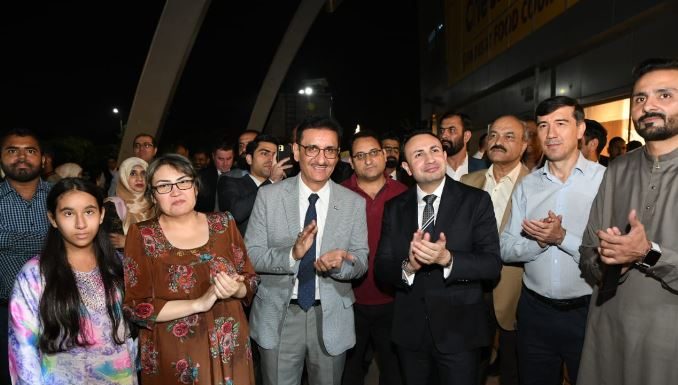
ISLAMABAD, MAY 13 /DNA/ – The United States formally returned more than 450 looted antiquities valued at over $23 million to the people of Pakistan today during a ceremony at the Islamabad Museum, marking one of the largest cultural repatriations in recent years.
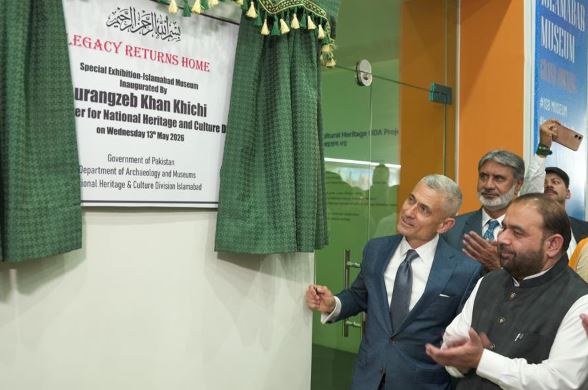
U.S. Assistant Secretary Paul Kapur joined Pakistan’s Minister for National Heritage and Culture, Aurangzeb Khan Khichi, to inaugurate an exhibition titled “Legacy Returns Home.” The event celebrated the recovery of artifacts spanning thousands of years of Pakistani history, including terracotta figurines dating back more than 4,000 years.
“These artifacts represent chapters of Pakistan’s history, connecting generations to their heritage,” Kapur said. “Each of these objects tells a story. Each belongs to the people of Pakistan. And each now is home.”
The repatriation was the result of a multi-agency investigation led by the Antiquities Trafficking Unit of the Manhattan District Attorney’s Office, with support from the U.S. Department of Homeland Security and Pakistani partners. Among the returned items are some of the earliest human-crafted representations in the world, offering insights into the region’s first settled communities.
Kapur noted that the timing holds special meaning as the United States celebrates the 250th anniversary of its independence under the “Freedom 250” initiative. “As Americans reflect on our own heritage, we recognize the importance of protecting cultural legacy,” he said.
The assistant secretary warned that illicit trafficking in antiquities is a multibillion-dollar global criminal enterprise that fuels organized crime and, in some cases, finances extremist networks. “No country can confront this challenge alone,” he said, highlighting ongoing U.S. cooperation with INTERPOL, customs agencies, museums, and academic institutions worldwide.
Kapur also underscored the significance of the fully ratified U.S.-Pakistan Cultural Property Agreement, which includes a five-year Action Plan designed to prevent illegally exported artifacts from entering the U.S. art market. The plan also promotes museum exchanges, professional training in conservation and collections management, and new partnerships between universities and research institutions in both countries.
“Border security is a critical component of this effort,” Kapur added, noting the role of the Department of Homeland Security and Customs and Border Protection in intercepting illicit cultural property at U.S. ports of entry.
Minister Khichi thanked the U.S. delegation for its partnership and leadership, reaffirming Pakistan’s commitment to protecting its cultural heritage.
“This work exemplifies the best of international cooperation—honoring the past, upholding joint goals, and creating new opportunities for collaboration and mutual prosperity,” Kapur said.
The exhibition at the Islamabad Museum will remain open to the public, allowing Pakistanis to view repatriated treasures that had been smuggled abroad, some for decades.