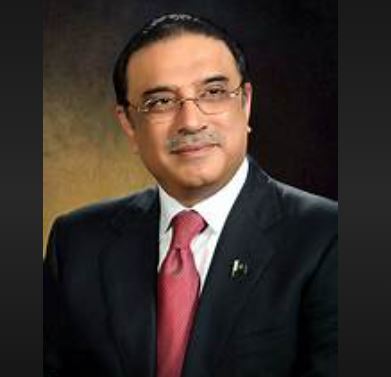
ISLAMABAD, Apr 14 (DNA): President Asif Ali Zardari on Tuesday stressed the need for dialogue, improved governance, enhanced connectivity and water management to address challenges in Balochistan, and underlined that Pakistan could not progress without the province’s stability and development.
Speaking during an interaction with participants of the National Workshop Balochistan-19 here at the Presidency, the president said creating an atmosphere of “workability” in the province was essential so that people would not feel compelled to migrate elsewhere in search of opportunities.
He noted that Balochistan was rich in mineral resources but required sustained long-term development initiatives rather than short-term measures, adding that connectivity had improved after the 18th Constitutional Amendment through the construction of several bridges over the Indus River linking Balochistan with other parts of the country.
The president, amid highlighting water as a critical issue, said canal lining projects were being undertaken to minimize seepage losses, stressing that water conservation was vital for agriculture as well as mining activities in the province.
He termed water security one of his top priorities and said efforts were under way to explore regional options, including water cooperation initiatives with Tajikistan, to support irrigation needs in Balochistan.
Referring to Gwadar Port, President Zardari said his vision was to ensure that dividends from the port’s development were shared with local tribes and communities, particularly those living along road corridors leading to Gwadar. He added that the port had the potential to become a major economic hub if stakeholders worked together to create a conducive investment environment.
The president underscored the importance of unity and internal reflection to address the province’s challenges, emphasizing that dialogue and democratic engagement remained the only viable path forward. “War is no solution to crises,” he said, urging all stakeholders to resolve differences through consultation and cooperation.
He said the people of Balochistan should benefit fully from the opportunities created under the China–Pakistan Economic Corridor (CPEC), describing it as a future trade route connecting the province to regional and global markets.
The president stressed that sustainable peace in Balochistan required improved resource utilization, investment-friendly conditions and greater focus on youth development, agriculture modernization and support for small landowners through targeted subsidies and specialized farming equipment.
The president also called for responsible handling of security challenges. He said attacks on foreign nationals, particularly Chinese teachers and workers, were regrettable and harmful to Pakistan’s interests. He also reiterated the need to counter insurgency through national cohesion and constructive engagement.
President Zardari said Pakistan remained committed to strengthening ties with regional partners and highlighted the importance of ports in Balochistan and Sindh for national economic growth, noting that other provinces would also benefit from access to maritime trade routes.
He reaffirmed that Pakistan’s unity and progress were closely linked with the stability of Balochistan, adding that the government would continue to provide resources and support for the province’s development and integration into the national mainstream.
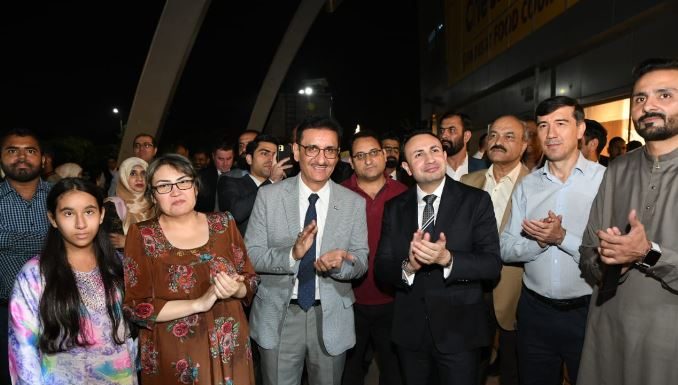
The session was attended by former prime minister Raja Pervaiz Ashraf, parliamentarian Sardar Yar Muhammad Rind and Member of the National Assembly Khalid Magsi, while the proceedings of the workshop were coordinated by Brigadier Bilal Ghafoor, Commander Signals 12 Corps.