Ansar M Bhatti
The recent US-Iran talks held in Islamabad were not only a test of diplomacy but also a moment of reckoning for Pakistan’s media. While the negotiations themselves ended without any breakthrough, another, equally revealing story unfolded on the sidelines one that exposed the glaring shortcomings of the national media. Despite being provided with full access, state-of-the-art facilities, and a central location at the Jinnah Convention Centre, Pakistan’s media failed to deliver even a single meaningful scoop. In contrast, both American and Iranian media outlets consistently broke news and kept their audiences informed in real time.
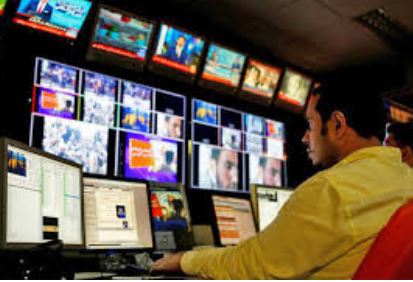
The entire Pakistani media television channels, print journalists, and digital platforms was housed at the Convention Centre with all logistical support in place. There were no apparent restrictions that could justify the lack of reporting. Yet, as events unfolded, it became painfully clear that access alone does not guarantee journalism. What was missing was initiative, sources, and perhaps most importantly, the professional rigor required to operate in a high-stakes international environment.
While Pakistani journalists remained largely passive observers, Iranian media demonstrated how effective communication between the state and media can shape narratives. Iranian government officials were actively engaging with their press, providing timely updates and strategic briefings. It was, in fact, Iranian media that first broke the news that the talks had failed well before any official confirmation reached Pakistani outlets. This was not accidental; it was the result of a coordinated effort to keep their media informed and empowered.
Similarly, American media outlets maintained a steady stream of updates throughout the negotiations. Their reporters, backed by strong institutional networks and access to key officials, were able to provide insights and breaking news as events unfolded. Even when information was sensitive, American journalists managed to stay ahead of the curve, reflecting both their professionalism and the openness of their system in facilitating media engagement.
In stark contrast, Pakistan’s media appeared disconnected and uninformed. Many well-known anchors, seasoned analysts, and prominent journalists were present at the venue, yet none managed to break a single significant development. The absence of exclusive reporting was not just disappointing it was indicative of deeper structural issues within the media landscape. It raised serious questions about the credibility of those who dominate primetime talk shows and present themselves as authoritative voices on international affairs.
The situation was further underscored during the media interaction held by the US Vice President at the Islamabad Serena Hotel. In a surprising yet telling move, Pakistani journalists were not invited to the briefing. Instead, the interaction was limited to a select group of American reporters. This exclusion was not merely a diplomatic slight; it was a reflection of the perceived irrelevance of Pakistani media in such high-level engagements. When journalists fail to demonstrate value, access is inevitably curtailed.
This entire episode should serve as a wake-up call for Pakistan’s media industry. The problem is not a lack of talent or resources but a lack of direction and accountability. Over the years, much of the media has become overly focused on sensationalism, political point-scoring, and repetitive talk shows that add little value to public discourse. The ability to cultivate sources, verify information, and break news to have been sidelined.
At the same time, the role of the state cannot be entirely absolved. Unlike Iran and the United States, where officials actively engage with their media, Pakistan’s communication mechanisms remain weak and inconsistent. The US-Iran talks in Islamabad may have ended in diplomatic failure, but they have provided an important lesson for Pakistan’s media. The stark contrast between local and international reporting has laid bare the gaps that need urgent attention.