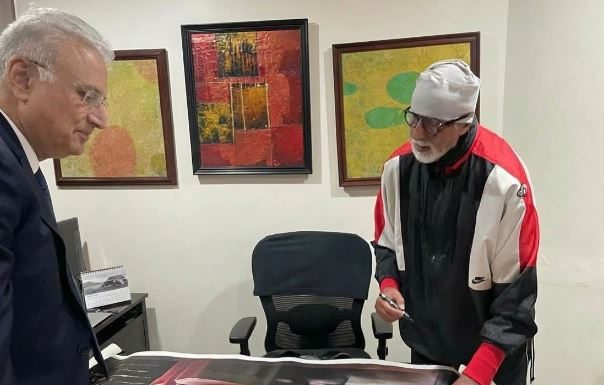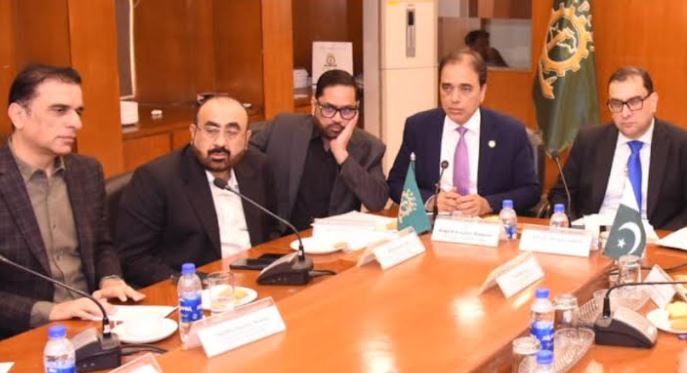
KARACHI, APR 6 /DNA/ – Atif Ikram Sheikh, President of the Federation of Pakistan Chambers of Commerce & Industry (FPCCI), has apprised that a high-profile, consultative and interactive meeting with Syed Shakil Shah, Member Customs (Operations), has discussed the most significant and prevailing issues pertaining to the customs department – while appreciating implementation of the faceless system; pre-arrival clearance and other digitalization measures.
Mr. Atif Ikram Sheikh added that the session – held both in-person and via virtual link across Pakistan – was aimed to discuss matters of mutual interest; presenting strategic, practical and reformative recommendations and addressing the pressing problems faced by the business community regarding Customs Operations at the same time.
Mr. Atif Ikram Sheikh, President FPCCI, emphasized upon the critical role of efficient border and port management in economic stabilization and growth as trade & industry relies heavily on seamless customs operations for trade facilitation. Faceless system and pre-arrival clearance have been FPCCI’s longstanding demands vis-à-vis ease of doing business and digitalization of customs – and, the apex body appreciates these transformational measures, he added.
In response to the concerns raised by FPCCI, Syed Shakil Shah, Member Customs (Operations), assured the business community of the department’s full cooperation – particularly, the need for the upgradation of customs laboratory; addressing the grievances related to complaint management system and making full use of alternative dispute resolution committees (ADRC).
Syed Shakil Shah also invited the individual companies and traders to bring their genuine and legitimate cases along with the supportive documentation. Pakistan Customs is dedicated to facilitating the traders under the permissible provisions as per the legal framework and regulations, he added.
Mr. Saquib Fayyaz Magoon, SVP FPCCI, highlighted the day-to-day and operational hurdles faced by importers and exporters. Our members frequently encounter challenges related to valuation disputes; HS codes; valuation rulings; clearance delays and systemic or procedural anomalies. We urge the customs department to establish a more transparent, fast-tracked and digitalized mechanism to ensure redressal of the above complaints, issues and delays.
Mr. Saquib Fayyaz Magoon questioned the procrastination in the upgradation and expansion of customs laboratory as there is no dearth of funds with customs; they have good technical human resources already and they are also in a position to hire more technical and scientific HR – if required. This step can eliminate unnecessary delays and costs when third-party laboratories have to be engaged. We propose a fully-functional; adequately-expanded and up-to-date customs laboratory of international caliber, he added.
Mr. Saquib Fayyaz Magoon raised the issue of futile litigation and court cases for the lack of alternative dispute resolution committees (ADRCs); specially, for SMEs as it is very difficult for them to afford the legal costs; engage lawyers and get their liquidity stuck in the import-export cycle.
Mr. Asif Sakhi, VP FPCCI, drew the Member Customs Operations attention to the operational delays at the ports as the current operational hurdles and extended dwell times at the ports directly inflate cost of doing business – rendering our products less competitive. He also proposed that goods imported under export facilitation scheme (EFS) shall not be subjected to valuation rulings.
Mr. Aman Paracha, VP FPCCI, stressed that customs procedures must be modernized, predictable and supportive of SMEs. He raised that issue of confiscating goods on account of a mere suspicion of smuggling as most of those cases actually turn out to be legitimate and legally fit in the end. But, the clearance from charges wastes 2-3 months for no fault of the concerned traders – causing delays and incurring costs, he added.
FPCCI leadership concluded the session by reaffirming its commitment to working closely with the Federal Board of Revenue (FBR) and Pakistan Customs to foster a conducive environment for trade and industry across Pakistan.