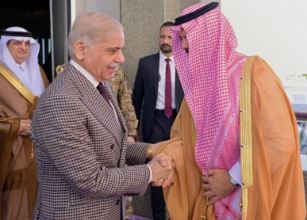
ISLAMABAD, MAR 13 /DNA/ – As the Middle East enters its third week of intensifying conflict, Pakistan has launched a full-court diplomatic press, with Prime Minister Shehbaz Sharif embarking on a critical one-day visit to Saudi Arabia on Thursday. The visit underscores Islamabad’s urgent push for de-escalation and a return to dialogue in a region reeling from a series of armed attacks and rising tensions.
According to a press briefing by the Foreign Office spokesperson, the Prime Minister, accompanied by Deputy Prime Minister and Foreign Minister Senator Muhammad Ishaq Dar, will meet with Saudi Crown Prince Mohammed bin Salman in Riyadh. The visit is framed as part of ongoing high-level coordination between the longtime allies on matters of regional peace and security, with a specific focus on “ending violence and hostilities.”
This diplomatic mission follows a flurry of telephone diplomacy by the Pakistani leadership over the past two weeks, engaging with counterparts across the region and beyond.
A Region on Edge
The current wave of hostilities, which the Foreign Office traced back to February 28, began with an Israeli attack on Iran, followed by retaliatory strikes and subsequent attacks involving several Gulf nations, as well as Türkiye and Azerbaijan. The briefing painted a picture of a volatile situation, with Pakistan expressing serious concern over “unprovoked attacks” that it said “constitute blatant violations of the sovereignty of the brotherly Gulf States.”
Pakistan has officially condemned the initial attacks on Iran, while also strongly condemning Iranian retaliatory strikes on Saudi Arabia, Bahrain, Jordan, Kuwait, Qatar, and the UAE. The conflict has already had direct consequences for Pakistan, with the Foreign Office confirming the deaths of two Pakistani nationals in the UAE and initiating efforts to repatriate their remains.
A Whirlwind of Diplomacy
The briefing detailed an exhaustive list of high-level calls made by both Prime Minister Sharif and Deputy PM Dar over the last 12 days, revealing Pakistan’s multifaceted effort to navigate the crisis.
- With Gulf Nations: The Prime Minister has spoken with the leaders of Saudi Arabia, Qatar, Jordan, Bahrain, Oman, and Kuwait, reaffirming Pakistan’s “full solidarity and support” and underscoring the “need for maximum restraint.”
- With Iran: In a significant move, PM Sharif spoke with Iranian President Masood Pezeshkian on Wednesday. The conversation included condolences on the reported martyrdom of Ayatollah Seyyed Ali Khamenei and congratulations to his successor, His Eminence Mojtaba Khamenei. Deputy PM Dar has spoken with his Iranian counterpart three times since the crisis began.
- With Others Affected: The Prime Minister condemned Israeli aggression against Lebanon in a call with its Prime Minister and strongly denounced drone attacks on Azerbaijan’s Nakhchivan exclave in a conversation with President Ilham Aliyev.
- Broader Engagement: The diplomatic outreach has extended beyond the immediate conflict zone, with calls to the leaders of Türkiye, Malaysia, Egypt, Canada, China, and Bangladesh, as well as the Commonwealth Secretary-General and the GCC.
Ensuring Citizen Safety
Amid the diplomatic push, the government has activated a Crisis Management Unit (CMU) at the Foreign Ministry. Special facilitation desks have been set up at Pakistan’s missions abroad to assist stranded nationals with visas, logistics, and travel arrangements. The Prime Minister has issued clear directives to prioritize community assistance, with missions launching dedicated apps, registration portals, and helplines.
Concern Over Canada-India Nuclear Deal
In a separate but significant statement, Pakistan expressed strong concern over the long-term uranium supply agreement between Canada and India. The Foreign Office criticized the deal as another “country-specific exception” in civil nuclear cooperation.
“It is particularly ironic given that India’s 1974 nuclear test, conducted using plutonium produced in a reactor supplied by Canada for peaceful purposes, had led directly to the establishment of the Nuclear Suppliers Group (NSG),” the spokesperson stated.
Pakistan argued that the deal allows India to use its domestic uranium for military purposes, thereby expanding its nuclear arsenal and destabilizing the strategic balance in South Asia. Islamabad reiterated its call for a non-discriminatory, criteria-based approach for civil nuclear cooperation with non-signatories of the Nuclear Non-Proliferation Treaty (NPT).