Qamar Bashir
This war may be presented as a fight over nuclear fear, missiles, or regime behavior, but beneath the headlines lies a far larger strategic contest: who will command the chokepoints through which the lifeblood of the global economy flows.
Wars are often sold to the world in moral language, but fought for strategic outcomes. The ongoing confrontation centered on Iran is no exception. To the United States, Israel, Britain, France, and much of the Western media, the war is projected as a campaign of necessity: a preemptive effort to stop an alleged nuclear threat, weaken Iranian missile power, and restore security to a volatile region. In that narrative, Western force is disciplined, purposeful, and increasingly successful, while Iran is portrayed as cornered, degraded, and losing ground.
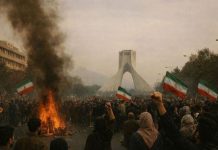
But from Tehran, and from those across the world who reject the Western reading of the conflict, the war appears entirely different. There, it is seen as a story of one nation, battered yet unbowed, resisting the most powerful military coalition on earth and still retaining the capacity to impose pain, uncertainty, and strategic cost. In this second narrative, Iran’s endurance itself becomes a kind of victory. A nation under siege is not expected to dominate the skies, but merely to survive, retaliate, and deny its enemies a clean triumph. That denial carries military, political, and moral weight.
Both sides choose facts that flatter their case. Both highlight only those developments that fit their desired conclusion. Yet when the smoke of propaganda begins to clear, a deeper question emerges: what, in truth, is this war really about?
The official Western justifications do not fully satisfy the scale of the conflict. If the primary objective were truly to destroy an imminent Iranian nuclear bomb, then the argument remains weaker than the rhetoric suggests. Iran has long been accused of standing only days or weeks away from weaponization, yet no public evidence has shown an actual nuclear test, a declared bomb, or the unmistakable operationalization of such a weapon. If Tehran had already crossed that threshold, the world would likely have seen far clearer proof by now. The gap between nuclear capability and an actual deliverable bomb is vast, and it is precisely within that gap that political narratives are often built.
The second argument, that Iran must be attacked because of its ballistic missile capability, has greater strategic logic but also exposes a double standard. Yes, Iran’s missiles threaten U.S. bases, allied infrastructure, shipping routes, and Israel. But many states possess missile capabilities without becoming targets of such an overwhelming multinational military design. North Korea, for example, is more isolated, more repressive, and openly nuclear-armed, yet it has not been subjected to this kind of sustained Western-Israeli military pressure. Why? The answer is not found in moral principle. It is found in geography.
Iran sits beside the Strait of Hormuz, one of the most critical energy chokepoints in human history. According to the U.S. Energy Information Administration data you provided, about 20.9 million barrels per day of oil moved through Hormuz in the first half of 2025. That amounts to roughly one-fifth of global petroleum liquids consumption and about one-quarter of globally traded maritime oil. In the same period, around 11.4 billion cubic feet per day of LNG also transited the strait, representing more than one-fifth of global LNG trade. These are not marginal figures. They are the circulatory system of the industrial world.
That is what makes Iran categorically different from North Korea. Iran does not merely possess missiles, a controversial nuclear program, or an adversarial ideology. Iran sits astride a waterway through which the economic oxygen of Asia and much of the wider world must pass. China, India, Japan, and South Korea together accounted for nearly three-quarters of Hormuz crude and condensate flows in the first half of 2025. In other words, the great Asian engines of growth remain heavily dependent on the uninterrupted movement of Gulf energy through waters adjoining Iran.
Now consider the wider maritime map. The Strait of Malacca handled 23.2 million barrels per day in the first half of 2025, even more than Hormuz, making it the largest oil chokepoint in the world by volume. It is the shortest and most efficient route connecting Middle Eastern energy suppliers with East and Southeast Asia. China alone accounted for 48% of the import volumes passing through Malacca in that period. Meanwhile, the Cape of Good Hope, though not a chokepoint, carried 9.1 million barrels per day as rerouted shipping avoided attacks and instability around the Red Sea. Bab el-Mandeb and the Suez-SUMED route, once central arteries to Europe, saw their flows nearly halved from 2023 levels due to insecurity and rerouting. The global energy system is therefore not merely about production; it is about maritime passage, route vulnerability, insurance cost, naval reach, and the ability to protect or disrupt the channels through which supply moves.
If the United States, through military presence, alliance architecture, naval supremacy, and regional basing, were able to dominate the security environment around Hormuz while retaining influence across the broader chain of maritime corridors stretching toward Bab el-Mandeb, the Red Sea, the Cape route, and onward to Asia’s receiving lanes, then Washington would possess extraordinary leverage over the global energy order. It would not legally “own” these waterways, nor permanently command every vessel that crosses them, but it could shape the conditions under which oil moves, slows, detours, becomes more expensive, or becomes politically hostage to security calculations.
And that leverage would be immense. The United States today is itself a top oil producer and far less dependent on Gulf imports than in previous decades. By contrast, Asia remains far more exposed to disruptions in Gulf exports. This asymmetry matters. A power less dependent on a chokepoint but more capable of militarily policing it enjoys a structural advantage over powers whose economies rely heavily on its uninterrupted use. Such an arrangement would allow Washington to pressure adversaries not necessarily by stopping every cargo physically, but by raising risk, insurance, delay, and uncertainty to levels that alter trade behavior. In global energy markets, fear itself is a weapon.
Venezuela adds another layer to this picture. It possesses the world’s largest proven crude reserves, and while sanctions, infrastructure decay, and underinvestment have kept production far below its potential, the country remains a massive latent energy asset in the Western Hemisphere. If Washington can tighten its grip over western supply sources while also exerting naval and strategic influence over eastern chokepoints, then it is not difficult to imagine a future in which energy becomes an even sharper geopolitical instrument. That would not mean total American control of global oil, but it would mean an ability to influence supply routes, pricing pressure, and economic vulnerability in ways few empires in history have ever possessed.
Such a scenario would place China in particular under long-term strategic stress. Its factories, transport networks, petrochemical industries, and export machine all depend on steady access to imported energy. Russia too would face increasing pressure if maritime and sanctioned routes became narrower, longer, costlier, or more politically constrained. Even U.S. allies would not be immune. Any state that disobeyed Washington on key matters could face indirect coercion through a security system that determines how safely and cheaply energy reaches world markets.
That, then, is the terrifying possibility hidden beneath the daily headlines. The war on Iran may not simply be about uranium enrichment, missiles, democracy, or the suffering of the Iranian people. It may be about who commands the valves of the global economy. It may be about transforming maritime geography into a mechanism of strategic obedience. It may be about giving one power the ability, in moments of crisis, to squeeze rivals, discipline allies, and bend energy-dependent economies toward submission.
And that is why this conflict is so dangerous. If Russia and China conclude that Iran is not merely a regional partner but the front line of a broader struggle over the future control of Eurasia’s energy lifelines, then the war may not remain confined to Iran at all. It could widen not because anyone desires world war, but because the consequences of inaction may appear even more catastrophic than the risks of confrontation.
The world therefore stands before a historic choice. Either the major powers step back and preserve a plural, negotiated, and open energy order, or they continue down a path in which chokepoints become instruments of domination and commerce becomes a hostage of force. If the second path prevails, then the attack on Iran will be remembered not as a regional war, but as the opening move in a far larger campaign to place the world’s economic bloodstream under strategic command. And if that day comes, nations will discover too late that oil was never just a commodity. It was power, mobility, sovereignty, and survival. Whoever controls its pathways does not merely influence the market. They hold a hand on the throat of the modern world.
Qamar Bashir
Press Secretary to the President (Rtd)
Former Press Minister, Embassy of Pakistan to France
Former Press Attaché to Malaysia
Former MD, SRBC | Macomb, Michigan