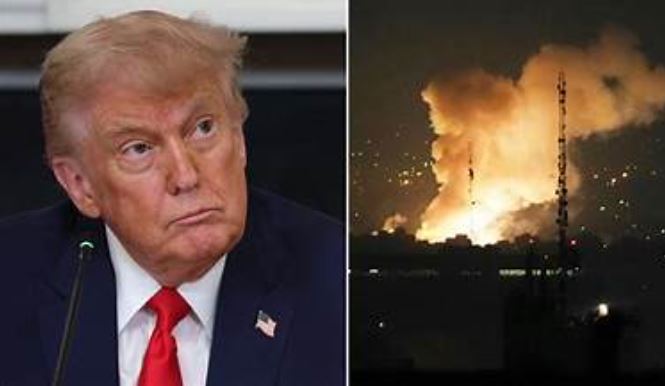
MAR-A-LAGO, FL: MAR 1 /DNA/ – In a dramatic escalation of diplomatic rhetoric amid a volatile military conflict, President Donald Trump announced on Sunday that he has agreed to engage in talks with Iran’s transitional leadership, claiming they have reached out for negotiations following the death of the country’s longtime Supreme Leader.
In a phone interview with The Atlantic magazine, Trump revealed that the new power structure in Tehran—hastily assembled after Ayatollah Ali Khamenei was killed in recent U.S.-Israeli strikes—has expressed a readiness to open a direct line of communication.
“They want to talk, and I have agreed to talk, so I will be talking to them,” Trump stated from his Mar-a-Lago residence.
The former President’s remarks come just one day after joint U.S.-Israeli military operations, referred to by some defense analysts as “Operation Epic Fury,” targeted Iranian military and leadership infrastructure. The strikes, launched amid the collapse of nuclear negotiations, resulted in the death of Khamenei and decimated a significant portion of the country’s top leadership, creating a power vacuum now being filled by an interim council that includes President Masoud Pezeshkian.
Trump characterized the potential talks as long overdue, suggesting the dramatic shift in Tehran’s power dynamics was necessary to bring them to the table. “They should have done it sooner. They waited too long,” he said, alluding to the failed diplomatic efforts that preceded the military escalation. “They could have had a deal a long time ago.”
When pressed for details on when the discussions might take place, Trump was non-committal, stating only, “I can’t tell you that.” He hinted that the composition of the Iranian side had changed so drastically that the calculus for negotiation had fundamentally shifted, noting that “many” of the regime’s former negotiators and leaders are “no longer available” due to the recent strikes, which he described as a “big hit.”
The former President’s claim of imminent talks could not be immediately verified. Official Iranian state media has yet to confirm any outreach to Trump or the Trump administration, and the transitional council in Tehran has been largely focused on consolidating control and responding to the ongoing military pressure.
The announcement introduces a volatile new element to an already chaotic situation. While Trump framed the potential dialogue as a path toward de-escalation, his criticism of the Iranian side for delaying negotiations is likely to be met with deep skepticism in Tehran, where the wounds from the strikes remain fresh. The region remains on high alert as the military operations continue and the world watches to see if the reported backchannel interest will materialize into formal talks.