ISLAMABAD, FEB 24 /DNA/ – The Centre for Afghanistan, Middle East and Africa (CAMEA) at the Institute of Strategic Studies Islamabad (ISSI), under its Ambassador’s Platform, organized a public talk titled “Pakistan–Iran Relations: An Enduring Partnership in a Changing Region.” H.E. Reza Amiri-Moghaddam, Ambassador of the Islamic Republic of Iran to Pakistan, Ambassador Khalid Mahmood, Chairman, Board of Governors, ISSI and Dr. Amina Khan, Director CAMEA spoke on the occasion.
The distinguished speaker, H.E. Reza Amiri-Moghaddam while stating his views said that the two neighboring countries share a long common border and together represent a population of nearly 350 million people. Robust people-to-people ties, a strategically significant geographic location, substantial complementary, and non-competitive economic structures create extensive opportunities for mutually beneficial cooperation. He further opined that Iran and Pakistan also maintain closely aligned positions on numerous regional and international issues, including the question of Palestine. He noted that terrorism and separatist movements are other serious challenges requiring enhanced cooperation and coordination between the two neighbors.
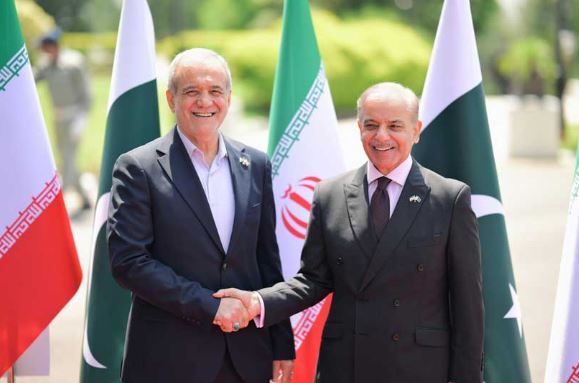
Moreover, their collaboration is reinforced through regional engagement, mutual diplomatic support, and common membership in important multilateral platforms such as the Shanghai Cooperation Organisation, Organisation of Islamic Cooperation, Economic Cooperation Organization (ECO), and the Developing Eight Organization for Economic Cooperation (D-8). He also shed light on the fact that Iran–Pakistan relations are currently experiencing one of their most constructive phases in recent decades. The exchange of more than 25 high-level delegations over the past two years, along with the signing of 25 agreements and memoranda of understanding across diverse sectors, reflects the upward trajectory of cooperation and the shared recognition of the strategic importance of bilateral relations. Two presidential visits from Iran within this period, in addition to visits by the Speaker of Parliament, the Secretary of the Supreme National Security Council, foreign ministers, and other senior officials, underscore the depth and dynamism of mutual interaction. Ambassador Reza also pointed to the vast economic potential of regional cooperation, noting that Pakistan and Iran together represent a market of nearly two billion people, which could further expand with the inclusion of Turkiye. He concluded by saying that Iran–Pakistan relations rest upon a solid foundation of shared history, cultural affinity, and common strategic interests.
Ambassador Khalid Mahmood, while expressing his views, said that Pakistan and Iran are two brotherly countries bound by culture, history and religion and relations with Iran predate the existence of Pakistan. Ties further deepened after Pakistan came into being and Iran was the first country to recognise Pakistan. Furthermore, Iran’s support for Pakistan during the 1965 and 1971 wars is also a testament to their close ties. There have been difficult phases in the relationship, which have strained the relationship at times. He further said that both countries are closer to each other than ever before, although challenges remain, like terrorism, and sectarianism. He concluded by saying that, in a changing region, with new hostilities, Pakistan and Iran remain committed to working together on shared peaceful solutions.
Dr. Amina Khan, while giving her remarks stated that Pakistan and Iran share a long-standing bilateral relationship grounded in historical ties, geographic proximity, and intertwined security and economic interests. In recent years, bilateral relations have remained positive and forward-looking, characterised by sustained high-level engagement, close coordination on regional and international developments and commitments to the principle of sovereign equality, she emphasized that there has been significant alignment on key issues, particularly Afghanistan, the ongoing genocide in Gaza, and the broader objective of preserving peace and stability in the region. She further said that during last year’s 12-day Israeli aggression, Pakistan strongly condemned Israel’s military strikes against Iran, labeling them “reckless” provocations that threaten regional stability and a “grave violation of Iran’s sovereignty and territorial integrity”, international law, and the UN Charter.
The talk was attended by diplomats, academics, students, practitioners and members of the civil society and ended with an engaging Question and Answer session.