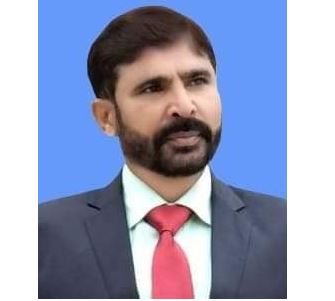
Dr. Muhammad Akram Zaheer
When Canadian Prime Minister Mark Carney addressed the World Economic Forum in Davos, his remarks cut through the usual diplomatic pleasantries. He spoke not of optimism or resilience, but of contradiction. For decades, he argued, Western states claimed to uphold a rules-based international order while quietly bending those very rules whenever it suited their interests. Liberal values were celebrated in speeches, free trade was praised in principle, and international law was invoked selectively firmly against rivals, cautiously against allies, and rarely against oneself.
This was not a radical critique voiced from the margins. It came from the heart of the Western establishment, delivered at a forum that has long served as a symbol of elite consensus. That alone gives Carney’s words a particular weight. More importantly, they reflect a reality that much of the world has experienced for years, even if it has rarely been acknowledged so openly by those who benefited most from the system. The idea of a rules-based order emerged from the ruins of the Second World War. It promised stability through shared norms, predictability through institutions, and fairness through law rather than force. In theory, it was meant to restrain power and protect the weak. In practice, power has often shaped the rules, decided when they apply, and determined who must obey them.
Western countries prospered immensely under this arrangement. Open markets expanded where it suited them, financial systems were designed around their interests, and global institutions reflected their priorities. Yet when the same rules threatened domestic industries, political stability, or strategic dominance, exceptions were quickly carved out. Trade barriers were reintroduced under new labels, sanctions replaced dialogue, and international law became a tool of pressure rather than a shared constraint.
The language of liberalism masked these inconsistencies. Human rights were defended passionately in some regions, ignored in others. Military interventions were justified in the name of international responsibility, while equally severe violations elsewhere were met with silence. Allies were forgiven for breaches that would have triggered outrage had they been committed by adversaries. Over time, this pattern did not go unnoticed. It bred resentment, scepticism, and a deep sense of double standards across much of the Global South.
Carney’s admission that “we participated in the rituals” is telling. The rituals of summits, declarations, and communiqués allowed the appearance of moral authority to be maintained even as the substance eroded. Calling out hypocrisy was avoided, not because it was invisible, but because it was inconvenient. The system worked well enough for those at the centre, and discomfort was an acceptable price for continued advantage. Today, that comfort has disappeared. The international order is under strain not only because of rising powers or regional conflicts, but because its moral foundations have weakened. When rules are applied unevenly, they lose legitimacy. When norms are enforced selectively, they cease to be norms and become instruments of power. The erosion of trust that follows cannot be repaired by rhetoric alone.
This crisis of credibility explains much of the current global disorder. Countries once willing to accept Western leadership now question its sincerity. Calls for restraint are dismissed as self-serving. Appeals to international law are met with reminders of past violations that went unpunished. Even within Western societies, public confidence in globalisation and international institutions has declined, fuelled by the sense that the benefits were unevenly distributed while the costs were socialised. The consequences are visible. Trade is increasingly fragmented, alliances are more transactional, and international institutions struggle to command consensus. Economic nationalism, once criticised as backward, has returned in the language of strategic autonomy and national security. Sanctions, tariffs, and subsidies have become routine policy tools, even as free trade remains a rhetorical ideal.
For developing countries, the implications are particularly severe. They are asked to adhere to fiscal discipline while facing mounting debt, to open markets while confronting protectionism elsewhere, and to commit to climate targets without comparable access to technology or finance. The promise that integration into the global system would lead to shared prosperity has, for many, remained unfulfilled.
This is where Carney’s remarks matter beyond Davos. Acknowledging hypocrisy is not the same as correcting it, but it is a necessary first step. The question is whether Western states are prepared to move beyond ritual towards reform. That would require more than adjusting language; it would demand a rebalancing of power within global institutions, a willingness to accept constraints on one’s own behaviour, and an honest reckoning with past inconsistencies. A genuinely rules-based order cannot survive if rules are negotiable for some and binding for others. International law cannot command respect if it is treated as optional. Free trade cannot regain credibility if it operates only when politically convenient. And human rights cannot be universal if their defence depends on strategic alignment.
None of this suggests abandoning international cooperation. On the contrary, it underscores the need to rescue it from selective application. A more stable global order would not emerge from dominance disguised as virtue, but from reciprocity grounded in fairness. That means listening to grievances that were previously dismissed, sharing responsibility rather than prescribing discipline, and recognising that legitimacy flows from consistency.
The shifting balance of power makes this reckoning unavoidable. As new economic and political centres emerge, the ability of any group of states to define the rules unilaterally is diminishing. Influence now depends less on enforcement and more on credibility. Countries that are seen as fair arbiters, rather than self-interested referees, will shape the future order. For Pakistan and other developing states, this moment presents both risk and opportunity. The weakening of old certainties creates instability, but it also opens space for voices that were previously marginalised. Demands for fairer trade terms, debt relief, and equitable climate arrangements are harder to ignore when the authority of the existing system is under question.
Yet this requires strategic clarity. Moral arguments alone will not suffice. Coalitions must be built, institutions engaged, and alternatives proposed that are practical rather than merely critical. The aim should not be to replace one form of imbalance with another, but to contribute to a system that is more even-handed and durable.
Carney’s speech will not, by itself, transform global politics. Davos has heard confessions before, and the world has seen how easily reflection gives way to routine. But the significance lies in what his words reveal: an awareness, within the West itself, that the old narrative no longer convinces. The gap between rhetoric and reality has become too wide to ignore.
Whether this admission leads to reform or merely to a more careful choice of words remains to be seen. What is clear is that the era of unquestioned authority is over. A rules-based order cannot be sustained by selective adherence. If it is to endure, it must finally become what it has long claimed to be a system where rules apply not just to others, but to all.