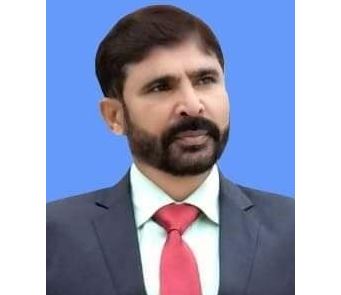
Dr. Muhammad Akram Zaheer
For much of the early post-Soviet period, Russia occupied an uncertain space between authoritarian tradition and democratic aspiration. The collapse of the Soviet Union had opened political life, loosened censorship, and allowed a degree of pluralism that was unprecedented in modern Russian history. Yet, more than three decades later, those openings have narrowed to the point where they are barely visible. Under President Vladimir Putin, Russia has moved steadily away from even the limited competition and debate that once existed, towards a system defined by personal rule, repression, and the systematic removal of political alternatives.
This transformation did not occur overnight. It has been the product of gradual institutional erosion, selective crackdowns, and the steady expansion of executive power. Each phase was justified as a response to instability, terrorism, foreign pressure, or national decline. Together, they have reshaped the Russian state into one where authority flows from a small circle around the presidency, and where dissent is no longer treated as a legitimate feature of public life but as a threat to be neutralised.
When Putin came to power in 2000, he inherited a country exhausted by economic crisis and political fragmentation. His early promise was order. Regional governors were brought to heel, powerful businessmen were reminded that wealth depended on political obedience, and federal institutions were strengthened. For many Russians, these measures were welcomed. The chaos of the 1990s had discredited the language of reform, and stability appeared more valuable than abstract freedoms. Yet the price of that stability soon became clear. Independent television channels were placed under state control. Political parties that failed to align themselves with the Kremlin found their access to elections restricted. Courts increasingly ruled in favour of the executive. Over time, what emerged was not the restoration of a strong state governed by law, but a political system in which the law served the interests of those in power. Elections continued, but their meaning changed. Outcomes became predictable, opposition candidates were excluded on technical grounds, and media coverage overwhelmingly favoured the incumbent leadership. Political competition survived largely as performance, not as a mechanism for accountability. This shift marked the transition from managed politics to enforced loyalty.
The most visible sign of Russia’s political descent has been the narrowing of space for independent voices. Journalists, activists, academics, and cultural figures who once operated within defined limits have found those limits erased. New legislation has steadily expanded the definition of “extremism,” “foreign influence,” and “discrediting the state.” These elastic terms allow authorities to prosecute critics without needing to demonstrate genuine threats. Civil society organisations have been particularly vulnerable. Groups working on election monitoring, human rights, or historical memory have been labelled undesirable or forced to close. Their offices have been raided, accounts frozen, and staff harassed. What remains is a network of officially approved organisations that echo state narratives and avoid sensitive subjects. Ordinary citizens have also been drawn into this atmosphere. Public demonstrations are rare and swiftly broken up. Online expression is monitored. Employers, universities, and local administrations increasingly act as extensions of the security system, discouraging any behaviour that might attract unwanted attention. The result is not only political silence but social caution — a widespread habit of self-censorship that reaches into daily life.
Russia’s full-scale war against Ukraine marked a decisive stage in this political evolution. Conflict has always offered authoritarian systems an opportunity to consolidate power, and the Kremlin has used the war to entrench controls that might once have provoked broader resistance. New laws criminalised criticism of military operations. Independent media outlets were blocked or forced into exile. Thousands were detained for anti-war statements, some receiving lengthy prison sentences. Even the use of certain words became grounds for prosecution. In this environment, the line between political opposition and criminal behaviour effectively disappeared. The war also provided a powerful ideological tool. State media framed the conflict as a civilisational struggle, portraying Russia as besieged by hostile forces determined to weaken and humiliate it. This narrative served two purposes: it justified repression at home and diverted attention from domestic failures. Economic hardship, corruption, and demographic decline could be attributed to external enemies rather than internal policy. At the same time, the prolonged nature of the war has deepened the state’s reliance on coercion. Mobilisation, surveillance, and expanded security powers have become normalised. Emergency measures have hardened into permanent features of governance.
A striking feature of contemporary Russia is the emptiness of its institutions. Parliament, once noisy and fragmented, now functions largely as a rubber stamp. Legislation is drafted within the executive and approved with minimal debate. The judiciary, formally independent, rarely challenges the state in politically sensitive cases. Governors are selected less for local legitimacy than for personal loyalty. This hollowing out has long-term consequences. Institutions that lack autonomy also lack credibility. They cannot mediate conflict, channel social demands, or provide lawful remedies. Instead, grievances accumulate beneath the surface, while formal politics becomes detached from social reality. Such systems often appear stable until they are not. Their rigidity limits the state’s ability to adapt, to correct mistakes, or to incorporate new social forces. By concentrating authority at the top, they also concentrate responsibility. Success is claimed by the leadership; failure, when it comes, will be difficult to deflect.
It would be misleading to describe Russian society as uniformly terrorised or uniformly supportive. What exists instead is a complex mixture of accommodation, fatigue, indifference, and quiet unease. Many citizens have learned to navigate the system by keeping politics at a distance. They focus on family, work, and private life, avoiding public statements. For others, state media’s constant emphasis on external threat resonates, reinforcing feelings of national grievance and defensive pride. Yet beneath these layers lies a growing sense of stagnation. Economic opportunities are limited, especially outside major cities. Sanctions and isolation have narrowed horizons. Young people face restricted mobility and uncertain futures. The social contract that once traded rising living standards for political passivity has weakened. What replaces it is less a shared vision than a set of constraints. Even cultural life reflects this duality. Theatres, exhibitions, and publishing houses continue to operate, but boundaries are tightly policed. Art may flourish in form, but its themes are increasingly cautious. History is reinterpreted to serve present needs, and alternative readings are marginalised.
At the centre of this system stands a single figure whose authority overshadows all others. Over time, Russia’s political structure has been reshaped around the presidency. Decision-making is concentrated, succession is uncertain, and loyalty to the leader has become the primary criterion for advancement. Such systems possess a particular vulnerability. By weakening institutions, they also weaken mechanisms of renewal. Leadership becomes irreplaceable in rhetoric but irremovable in practice. Political life narrows to the maintenance of power rather than the management of society. The cultivation of traditional values, patriotic rituals, and selective historical memory plays an important role here. These narratives provide moral language for obedience and frame political loyalty as cultural authenticity. Yet they cannot resolve structural problems. They may postpone reckoning, but they cannot prevent it.
Russia’s internal transformation carries consequences beyond its borders. A state organised around personalised authority and sustained confrontation is less inclined towards compromise. Foreign policy becomes an extension of domestic legitimacy, and external conflict reinforces internal control. For neighbouring regions, this has meant heightened insecurity and diminished predictability. For the wider international system, it complicates engagement. Diplomacy with a government that equates dissent with betrayal and negotiation with weakness becomes inherently fragile. At the same time, Russia’s experience offers a broader lesson. The erosion of political freedoms rarely begins with dramatic rupture. It advances through incremental adjustments, justified as temporary or necessary. By the time repression becomes unmistakable, the institutions capable of resisting it have often already been neutralised.
Russia today stands as a case study in how a society can drift from imperfect openness to entrenched authoritarianism without a single decisive break. Each step along the way was presented as correction, defence, or consolidation. Together, they have produced a system where power is insulated from accountability, and where public life is organised around caution rather than participation. Whether this trajectory can be reversed remains an open question. History suggests that systems built on fear and loyalty rather than consent and law face inherent limits. Economic strain, generational change, and the unpredictable consequences of war all exert pressure. Yet pressure alone does not guarantee transformation.
For now, Russia’s political reality is defined less by the promise of reform than by the management of control. It is a condition shaped not only by the will of those at the top, but by the slow weakening of the structures that once offered society a voice. In that erosion lies the deeper story of Russia’s descent not merely into a harsher state, but into a political order where the future is increasingly confined by the present.