
By Muhammad Mohsin Iqbal
In childhood, if we stepped out of the house for an errand and failed to return at the appointed hour, the entire household would sink into a quiet unease. Mothers would begin to pace, fathers would cast repeated glances towards the gate, and when at last we returned—dusty and carefree—we were met with a barrage of questions that felt little short of a formal interrogation. Irritation often overcame us in those moments, and it was then that a grandmother’s gentle yet resolute voice would remind us that one day we would understand it all ourselves. Time, as it invariably does, proved her right. Today, we worry for our own children in much the same way our parents once worried for us.
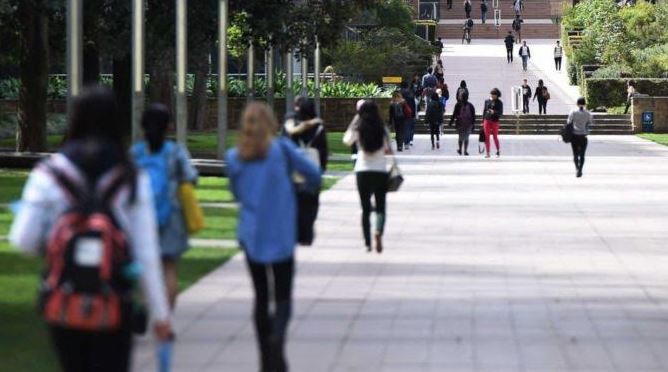
The moment has now arrived when parents dispatch their children each morning to schools, colleges, and universities with a mingled sense of hope and apprehension. Education is still regarded as the safest path to dignity and stability. Yet a chilling fear has begun to haunt families across Pakistan; what if a child were to end his or her life within the very walls of an educational institution? For parents, no calamity is more devastating, and no silence more unbearable, than that which follows the extinguishing of a young life.
Lahore, long considered the intellectual heart of the country, has in recent years witnessed a disturbing rise in such tragic incidents, with their frequency particularly notable in certain private universities. Similar tragedies have also been reported from Peshawar, Karachi, Islamabad, Faisalabad, and other cities. In one case, a student is found lifeless in a hostel room; in another, a young soul leaps from a building after a bitter confrontation with the administration; elsewhere, a few hastily written lines are left behind, heavy with despair. Each incident briefly flashes across news screens and social media, yet behind every headline lies a family shattered beyond repair.
Credible studies and media-based analyses reveal that a significant proportion of reported student suicides occur within colleges and universities. Research drawing upon newspaper records over several years suggests that nearly half of such cases are linked to higher education institutions. Even more alarming are the findings of academic surveys; more than forty percent of university students in Pakistan exhibit symptoms of depression, while studies conducted among medical and professional students indicate that nearly one-third acknowledge suicidal thoughts. A smaller, yet deeply troubling, percentage admit to having attempted suicide at some point. These figures, frequently cited in research, almost certainly understate the true scale of the crisis due to stigma and chronic underreporting.
The tragedy assumes an even more painful dimension when the victim is a young girl. Instead of restraint and compassion, society often responds with whispers, insinuations, and merciless speculation. Her character is scrutinised, her family placed in the dock, and her suffering rendered suspect or sensational. Rarely do we pause to ask, with sincerity, what unbearable pressure or humiliation might have driven her to such a final decision.
The causes of this crisis are complex and deeply interwoven. Academic pressure stands foremost among them. Many institutions privilege grades, attendance percentages, and rigid discipline over mental well-being. Instances have emerged where students were publicly humiliated for academic shortcomings or threatened with expulsion—consequences that, for a vulnerable mind, can feel like the end of the world. Family expectations, though often born of love, can become suffocating when success is narrowly defined and failure treated as disgrace. Financial strain, fear of unemployment, and relentless competition further intensify this anxiety.
Modern life has added new dimensions to old pressures. Social media magnifies comparison and failure, exposing young minds to constant judgement while offering little genuine support. At the same time, mental health remains a taboo subject. Many students suffer in silence, fearful that seeking help will earn them labels of weakness or instability. The erosion of patience, tolerance, and empathy within society has only deepened their isolation.
A profound spiritual vacuum also plays its part in this tragedy. Growing distance from faith has deprived many young people of an inner anchor. Islam not only forbids suicide but places immense emphasis on hope, patience, and the sanctity of human life. When these values fade, despair finds fertile ground in which to take root.
If this trend continues unchecked, parents will inevitably begin to question whether universities are sanctuaries of learning or arenas of silent torment. This crisis cannot be addressed through perfunctory inquiries after each tragedy. It demands a clear, sustained, and humane course of action.
Educational institutions must establish credible and confidential mental health services staffed by trained professionals. Counselling should not be an afterthought but an integral part of campus life. Teachers and administrators must be trained to recognise signs of psychological distress and to enforce discipline with humanity rather than humiliation. Academic policies should allow room for compassion without compromising standards.
Parents, too, must recalibrate their expectations—valuing effort and integrity over mere results—and create homes where children feel safe to speak openly of failure and fear. At the national level, the state must invest in mental health infrastructure, improve the collection of suicide-related data, and ensure the enforcement of protective regulations within educational institutions.
Above all, society must rediscover empathy and restore meaning to life through faith, purpose, and human connection. Only then can parents send their children out each morning with confidence rather than dread, assured that the pursuit of education will nurture life, not extinguish it.