
by Muhammad Mohsin Iqbal
Field Marshal General Syed Asim Munir’s stewardship of Pakistan’s armed forces has coincided with a period of rare convergence between military credibility, diplomatic momentum, and emerging economic possibilities. The brief but consequential India–Pakistan conflict of May 7–10, 2025 stands as the pivotal moment that redefined Pakistan’s posture in a volatile region and repositioned its leadership on the global stage. India’s missile strikes, launched under the codename Operation Sindoor in the wake of so-called terrorist incident in Kashmir, were widely interpreted as an attempt to impose a new coercive normal upon Pakistan. Instead, the response it provoked altered strategic calculations across capitals.
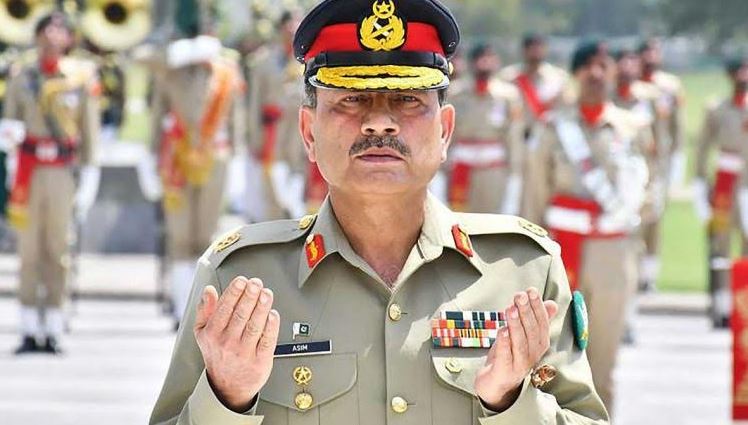
From the outset, General Munir adopted a posture that combined clarity with restraint. His public warning that any aggression would meet a “swift and intense” response was not rhetorical flourish but a calibrated signal of resolve. At the same time, he repeatedly emphasised that Pakistan sought deterrence, not escalation, reminding the world that recklessness between two nuclear-armed states carried incalculable risks. Under his command, Pakistan’s armed forces executed precise counterstrikes, downed multiple Indian aircraft, and demonstrated operational superiority without crossing thresholds that might have triggered full-scale war. This balance between force and restraint restored deterrence while allowing diplomatic channels to reassert themselves.
International reaction was unusually forthcoming. The crisis was widely seen as having been defused through disciplined command rather than chance. Then U.S. President publicly credited General Munir for preventing nuclear escalation, an acknowledgment that carried symbolic weight given Washington’s long-standing emphasis on crisis stability in South Asia. Such praise strengthened Pakistan’s global standing and enhanced the domestic legitimacy of its military leadership, reinforcing the perception of Pakistan as a responsible nuclear power capable of managing conflict under extreme pressure.
The months that followed marked a notable evolution in General Munir’s role. He emerged as a central figure in what many observers described as Pakistan’s geopolitical re-entry after years of diplomatic drift. High-level engagement with the United States resumed, ties with Saudi Arabia deepened—symbolised by the award of the King Abdulaziz Medal—and defence diplomacy expanded across the Middle East, Central Asia, Africa, and Southeast Asia. Joint military exercises, counterterrorism cooperation, and economic discussions increasingly ran in parallel, reflecting a recognition that security and economics are now inseparable in global statecraft.
This context frames the most consequential question facing Pakistan today; can enhanced military credibility and diplomatic outreach help loosen the country’s long-standing dependence on foreign debt and the International Monetary Fund? Pakistan’s external debt now exceeds $100 billion, hovering around 70 per cent of GDP, with an IMF Extended Fund Facility of approximately $7–8 billion extending into the latter half of the decade. While reform projections suggest a gradual easing of pressure, structural vulnerabilities remain deeply entrenched.
Against this backdrop, defence exports have emerged as a strategic instrument rather than a peripheral activity. General Munir’s support for leveraging Pakistan’s indigenous defence industry reflects a broader understanding that military capability can generate economic dividends. The performance of Pakistani weapons systems during the May 2025 crisis functioned as an unintended but powerful demonstration to potential buyers. Cost-effective, combat-tested, and supported by flexible financing arrangements, these systems suddenly commanded renewed attention.
The JF-17 Thunder fighter jet has become the centrepiece of this strategy. Azerbaijan’s $4.6 billion agreement for forty JF-17 Block III aircraft stands as Pakistan’s most significant defence export success to date. Indonesia is in advanced negotiations for dozens of jets and drones, a deal that could generate several billion dollars while anchoring long-term defence cooperation in Southeast Asia. Sudan is nearing an agreement initially valued at $1.5 billion, with expansion potential exceeding $4 billion, encompassing aircraft, drones, weapons, training, and logistics. Saudi Arabia has explored either a direct $4 billion procurement or the conversion of roughly $2 billion in loans into aircraft purchases. Iraq and Bangladesh have also expressed interest, reinforcing the breadth of Pakistan’s defence diplomacy.
If even a portion of these agreements materialises, the financial inflows could reach into the tens of billions of dollars. Such earnings would bolster foreign exchange reserves, ease balance-of-payments stress, and support debt servicing, thereby reducing reliance on emergency IMF interventions. Defence Minister Khawaja Asif’s assertion that sustained arms exports could help Pakistan avoid future bailouts may be optimistic, yet it reflects a growing recognition that traditional export models alone are insufficient.
Economists caution, however, that defence exports cannot by themselves resolve Pakistan’s economic challenges. Arms sales must be embedded within broader fiscal discipline, export diversification, and institutional reform. Non-defence exports have shown only modest growth, underscoring the need for parallel progress across the wider economy.
Still, opportunities rarely present themselves so clearly. Field Marshal Munir’s leadership during crisis, followed by diplomatic consolidation and economic outreach, has opened strategic space that Pakistan has long lacked. If this moment is matched by coherent economic policy and sustained reform, the gains achieved through strength and restraint may yet translate into greater financial autonomy and a more secure national future.