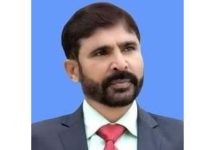
Dr. Muhammad Rizwan Bhatti
Indeed, drug misuse has grown to be a deeply ingrained societal catastrophe that is steadily undermining Pakistan’s socioeconomic structure and posing one of the biggest challenges of our time. Nearly 6.7 million Pakistanis abuse controlled drugs, with cannabis continuing to be the most commonly used substance and heroin addiction impacting hundreds of thousands of people across the country’s demographic spectrum, according to the most recent official estimates and United Nations statistics. Consequently, cannabis, opioids cocaine, and an expanding variety of synthetic narcotics not only endanger personal health but also threaten public safety and national stability.
Moreover, June 26 is designated as the International Day Against Drug Abuse and Illicit Trafficking by the United Nations Office on Drugs and Crime (UNODC), serving as a vital moment to unite all facets of society against the scourge of drugs. Significantly, the theme for 2026 emphasizes the need for community-led prevention, strengthening treatment programs and eliminating stigma and prejudice, thereby reiterating that long-term solutions demand both empathy and collective action. As such, this day continues to be an important platform for awareness-raising, advocacy and sustained community engagement.
Furthermore, substance abuse, clinically recognized as addiction, refers to the obsessive and frequently uncontrolled use of “narcotics,” substances that alter mood or relieve pain but eventually cause severe physical and psychological harm. While hard drugs such as heroin, methamphetamine, ecstasy and ICE have especially devastating consequences, even so-called “soft drugs” like marijuana, sedatives and certain prescription medications can gradually lead to serious health complications. Alarmingly, Pakistan’s youth, who make up a sizable 64% portion of the population, remain particularly vulnerable; a complex mix of peer pressure, family discord, academic stress, unemployment and social uncertainty often pushes young people toward these destructive coping strategies.
Geographically speaking, due to its strategic location within the Golden Crescent, Pakistan, alongside Afghanistan and Iran, bears a unique burden as both a transit and consumption zone for opiates, particularly heroin and opium cultivated in Afghanistan. Historically, the Golden Crescent has surpassed the Southeast Asian Golden Triangle (Burma, Thailand, and Laos) in global narcotics production, and, as a result, a significant share of Afghan opiates destined for international markets continues to pass through Pakistan’s land and maritime routes.
Against this backdrop, Pakistan’s law-enforcement framework has visibly expanded its operational reach to confront this multifaceted challenge. Notably, Regional Police Officer (RPO) Faisalabad, Sohail Akhtar Sukhera, has promoted multi-modal and multi-sectoral strategies to curb crime and dismantle drug networks at the grassroots level. Under his leadership, sustained intelligence-based operations and targeted raids have been conducted across Faisalabad and adjoining districts, leading to the detention of thousands of individuals involved in criminal activity, including professional drug peddlers, habitual offenders and addicts occupying public spaces. In one recent operation alone, over 2,800 individuals were apprehended from marketplaces, transit hubs and educational institutions, with hundreds subsequently booked for criminal involvement.
In addition, RPO Sohail Akhtar Sukhera has devised an activity-based intervention module aimed at fostering confidence, resilience and decision-making skills among students, enabling them to withstand peer pressure and refrain from indulging in negative behaviours such as drug and substance abuse. Simultaneously, he has actively engaged community stakeholders including business leaders, educators and civil society actors to develop cooperative crime-prevention frameworks that strengthen information sharing, enhance neighbourhood safety and reinforce the principle that public security is a shared responsibility. Enhancing internal accountability within the police force and enforcing a zero-tolerance policy toward elements that undermine peace and order have also remained central to his operational directives.
While speaking to parents, students and community members, RPO Faisalabad Sohail Akhtar Sukhera, cautioned that drug misuse among Pakistani young is no more a minor issue but rather a reflection of more serious social flaws. He pointed out that drugs become an easy way out when young brains are overburdened by academic pressure, peer pressure takes the role of mentorship and families avoid having important talks. Sohail Sukhera contends that placing the blame solely on people misses the mark and that homes, educational institutions and the government must all take collaborative responsibility for the situation. He warned that substance misuse will continue to erode the social and moral underpinnings of the next generation in the absence of early intervention, honest communication and support networks that rebuild resilience and purpose.
Legally, the Control of Narcotic Substances Act (CNSA) of 1997 provides the foundation for prosecuting drug traffickers, prescribing life imprisonment or even the death penalty for trafficking substantial quantities of prohibited narcotics. Nevertheless, long prison sentences alone are insufficient to curb demand; rather, comprehensive prevention strategies, expanded rehabilitation services and the de-stigmatization of treatment seekers are urgently required.
Beyond health consequences, the drug trade carries profound social and economic repercussions. Illicit drugs erode community trust, fuel crime, foster corruption and divert vast sums of money into informal economies, thereby undermining legitimate growth. At the same time, addiction places immense pressure on families and healthcare systems, particularly in areas where social support structures and medical infrastructure remain weak or non-existent.
Recognizing addiction as a medical and social issue rather than merely a criminal offense, the Anti-Narcotics Force (ANF) has established model treatment and rehabilitation facilities across Pakistan. However, the sheer magnitude of the problem necessitates hundreds more such institutions, especially in regions grappling with youth unemployment and social dislocation. Only through comprehensive, accessible and sustained treatment pathways can individuals break the cycle of dependency and reintegrate into society as productive citizens.
Therefore, on World Drug Day 2026, Pakistan must reaffirm its commitment to building resilient communities, enhancing educational and employment opportunities for youth and strengthening inter-agency coordination to dismantle both domestic and transnational drug networks. Police, ANF, customs authorities, paramilitary forces and community partners must act in unison to make drug abuse and illicit trafficking both less profitable and less pervasive.
Ultimately, combating the drug menace demands unwavering political will, social cohesion and sustained collective effort that places human dignity, prevention and rehabilitation at its core. Through shared resolve and coordinated action, the devastation caused by addiction can be reduced, bringing society closer to the promise of safety, opportunity and well-being for all its members.
Dr. Muhammad Rizwan Bhatti holds a PhD in Political Science and writes regularly on terrorism, counterterrorism, countering violent extremism, and policing affairs. He can be reached at [email protected].