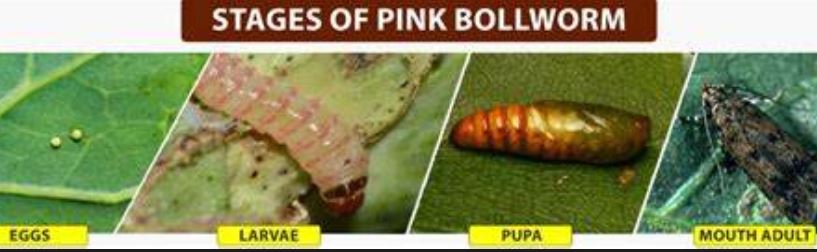
MULTAN, JAN 10 (APP/DNA): The Punjab Agriculture Department has issued an off-season management strategy to control pink bollworm, a damaging cotton pest that affects both yield and fibre quality.
A spokesperson for the department said cotton is a vital crop for the country, and nearly 70 percent of its total production comes from Punjab. Pink bollworm is considered one of the most harmful pests of cotton, and its attack not only reduces production but also severely affects quality.
The spokesperson said that off-season management of pink bollworm is of great importance because the pest does not have any alternate host plant. By adopting proper off-season measures, its breeding cycle can be broken and the next cotton crop can be protected from serious attack. Farmers have been advised that if they intend to keep cotton sticks for fuel, they should make small bundles and store them with the stubble ends facing downward so that sunlight exposure helps destroy remaining pupae before the next crop is sown.
It was further stated that cotton waste present in ginning factories and larval forms hidden in twin seeds must be destroyed. Farmers should also turn over heaps or bundles of cotton sticks so that pupae present in the trash beneath are eliminated. Stored cotton seed should be fumigated with aluminum phosphide (phosphine) tablets at the rate of 30 tablets per 1,000 cubic feet to kill larvae and pupae present in twin seeds.
The spokesperson added that strict implementation of these off-season measures can significantly reduce pink bollworm infestation in the upcoming cotton crop and help improve both yield and quality.