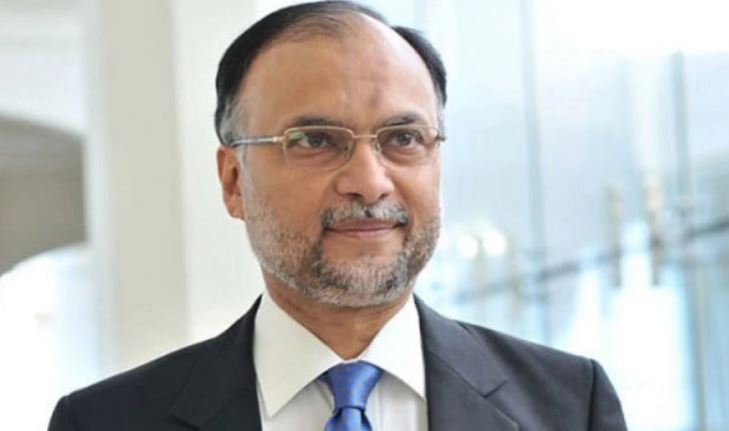
Highlighting the strategic importance of higher education, Ahsan Iqbal said that in the 21st century, the real strength of nations lay in strong institutions and a well-trained human resource base
Saifullah Ansar
ISLAMABAD, Jan 5 (DNA): Federal Minister for Planning, Development and Special Initiatives Professor Ahsan Iqbal on Monday said the launch of Maktab, an integrated digital platform introduced under the Higher Education Commission (HEC), was a clear message of Pakistan’s national resolve to transform higher education through digital governance, transparency and performance-based systems.
Addressing the online launching ceremony of Maktab, the minister said Pakistan’s universities were moving away from cumbersome paper-based processes towards modern, efficient and data-driven performance management systems.
“From now on, decisions in higher education institutions will not be based on assumptions but on data, evidence and measurable outcomes,” he remarked.
Highlighting the strategic importance of higher education, Ahsan Iqbal said that in the 21st century, the real strength of nations lay in strong institutions and a well-trained human resource base.
“World-class universities are not built merely through impressive buildings; they are shaped by transparent governance, effective management and accountability,” he added.
The minister said that nations do not progress accidentally. “Development is the result of planning, discipline, continuity and sustained reforms,” he said, stressing that knowledge, technology and innovation formed the backbone of Pakistan’s economic resilience and future competitiveness.
Referring to the government’s long-term development roadmap, he said innovation and competitiveness played a central role across all five pillars of the Uraan Pakistan vision.
“Human resource development was declared a national priority as early as Vision 2010, laying the foundation for reforms in higher education,” he recalled.
Under successive national visions, the minister said, concrete steps were taken to strengthen research and talent development. He said the landmark 10,000 PhD programme had been launched to produce globally competitive scholars, while Vision 2025 focused on establishing modern research and innovation centres across the country.
“Now, under Uraan Pakistan, universities, research and the economy are being integrated into a single ecosystem to drive sustainable growth,” he said, adding that Pakistan’s top 10 premium universities would be prepared to compete at the global level.
He informed the participants that a dedicated committee had been formed to identify premium universities and propose comprehensive reform measures.
“The committee will submit its recommendations within one month, which will serve as the basis for transforming selected institutions into globally competitive centres of excellence,” he said.
The minister further said that a seven-point University Quality Framework was being implemented to enhance academic standards, governance and research output. Under this framework, public funding for higher education would be linked to performance, outcomes and measurable impact rather than routine allocations.
“Competition and merit will now be the guiding principles in our universities,” he said, adding that the era of complacency and inefficiency was coming to an end.