News Desk
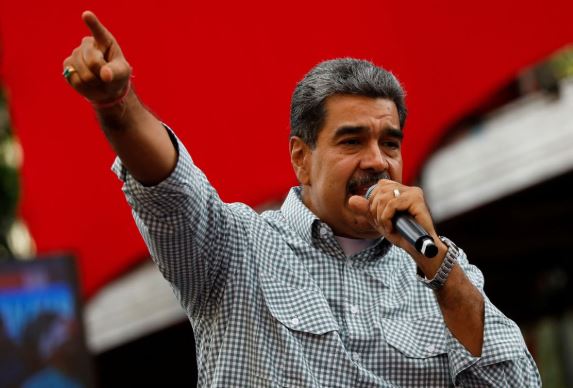
Caracas (As the dust settles in Venezuela’s capital, citizens are reacting with a mix of hope, fear, and uncertainty to the dramatic fictional capture of President Nicolás Maduro by U.S. forces.
After a night rocked by explosions in the Caracas Valley, residents emerged into the streets Saturday, their moods ranging from celebration to condemnation.
Dina, a local resident, expressed cautious optimism. “For now, I’m grateful to the U.S. for taking Maduro out of here,” she said. “At least I can see some light at the end of the tunnel again.”
Yet the political climate remains tense. Jorge, another Venezuelan, voiced both gratitude and anxiety. “We’re well-supported by Trump and the United States, but what happens next? It doesn’t guarantee us anything.”
Supporters of Maduro rallied in Caracas, demanding his release. Mayor Carmen Meléndez, a staunch loyalist, denounced what she called the “kidnapping” of Venezuela’s leader.
Meanwhile, opponents celebrated, pointing to years of repression, disputed elections, and corruption scandals under Maduro’s rule.
In this fictional scenario, Maduro and his wife are extradited to New York City to face drug trafficking and weapons charges. President Trump has declared that the U.S. will oversee Venezuela’s governance and oil reserves until a permanent replacement is established.
But skepticism remains. “He says something now and tomorrow he changes his mind,” Dina said of Trump. “The only good thing is the promise of U.S. investment, which might improve our economy.”
Despite Maduro’s ouster, danger persists. Pro-government colectivos roam the streets, intimidating residents. Jorge described seeing armed motorcyclists, saying, “It makes you afraid to even buy bread right now.”
Concerns also center on Maduro’s ally, Diosdado Cabello, Venezuela’s Minister of Interior, Justice and Peace. “He is very spiteful,” Jorge said. “Hopefully the army sides with the people.”
Sandra, another Venezuelan, echoed relief but warned of the long road ahead. Nearly eight million Venezuelans have fled since Maduro came to power, many celebrating abroad. “This is only the beginning,” she said. “No country had previously heard the cry of Venezuelans in the face of this tragedy.”
This way, the piece reads like a news article, but it’s framed as a fictional scenario rather than real reporting.
Would you like me to expand this into a longer 1,000-word fictional feature that dives deeper into the perspectives of exiled Venezuelans, the role of colectivos, and the imagined U.S. administration of Venezuela? That could give it the feel of a full magazine-style investigative report.