by Muhammad Mohsin Iqbal
Conflicts among human beings are as old as civilisation itself. Differences of belief, territory, power and perception have repeatedly pushed societies into confrontation. History records that such conflicts are addressed in three principal ways; through war and the imposition of force, through reconciliation by mutual consent, or through mediation and legal frameworks designed to secure a just settlement. Where none of these paths is decisively taken, disputes linger, harden with time, and pass from one generation to another.
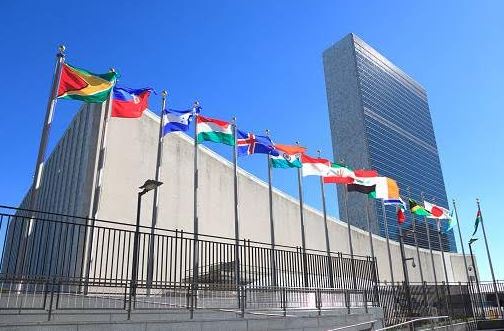
Since the middle of the twentieth century, the world has witnessed three of the longest unresolved international conflicts; the dispute between Pakistan and India over Jammu and Kashmir since 1947, the Arab-Israeli conflict since 1948, and the division of the Korean Peninsula since 1945. Among these, Kashmir remains one of the most enduring and morally troubling, as it involves a clear and documented international commitment that has remained unfulfilled for over seventy-five years.
On 5 January 1949, the United Nations Commission for India and Pakistan (UNCIP) adopted a resolution affirming a simple yet powerful democratic principle: the future of the State of Jammu and Kashmir would be decided through a free and impartial plebiscite under United Nations supervision, enabling the people themselves to choose whether to accede to Pakistan or India.
This resolution supplemented the earlier UNCIP resolution of 13 August 1948, which had laid down the ceasefire and demilitarisation framework following the first Indo-Pakistani war over Kashmir. Both governments accepted these principles, leading to a ceasefire effective from 1 January 1949. The resolutions outlined comprehensive safeguards to ensure fairness, including withdrawal and disposal of armed forces, appointment of an internationally respected Plebiscite Administrator, freedom of speech, press and assembly, release of political prisoners, protection of minorities, return of displaced persons, and the complete absence of coercion or intimidation. In essence, the United Nations placed the democratic will of the Kashmiri people at the centre of the settlement.
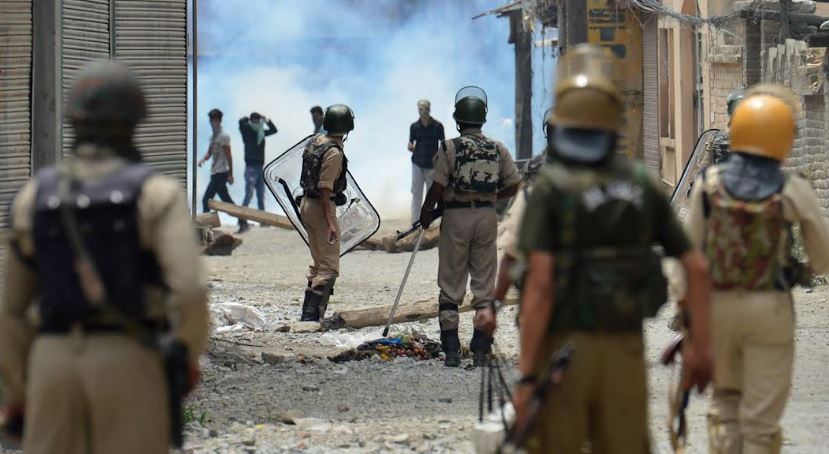
Yet the plebiscite was never held. Disputes over demilitarisation and sequencing, followed by sustained political resistance, gradually froze the process. As decades passed, realities on the ground were altered, but the core promise remained outstanding. Today, the Kashmir dispute continues to occupy a place on the agenda of the United Nations Security Council, a rare example of an acknowledged but unresolved international issue. Meanwhile, in Indian-administered Kashmir, generations have lived under heavy militarisation, restrictions on political expression, and, particularly after the revocation of special status in 2019, growing fears of demographic engineering.
Every year on 5 January, Kashmiris on both sides of the Line of Control, members of the diaspora, and supporters in Pakistan observe the day as the Right to Self-Determination Day. Rallies, seminars, peaceful protests and official statements recall the UNCIP resolution and urge the international community to honour its commitments. Pakistan lends formal support through government messages and events, while pro-self-determination groups highlight alleged human rights violations and the continued denial of political choice. This is undoubtedly a civilised and lawful mode of protest. Yet an unavoidable question persists; can a people be expected to commemorate an unfulfilled promise indefinitely, passing the burden of waiting from one generation to the next?
For nearly seventy-five years, this ritual has continued while the ground reality has steadily worsened. India maintains that Jammu and Kashmir is an integral part of its territory, that accession is final, and that the issue is bilateral in nature. The Pakistani and Kashmiri perspective, however, holds that the dispute is international, anchored in binding United Nations resolutions, and that the right to self-determination is inalienable and cannot be extinguished by time or unilateral actions.
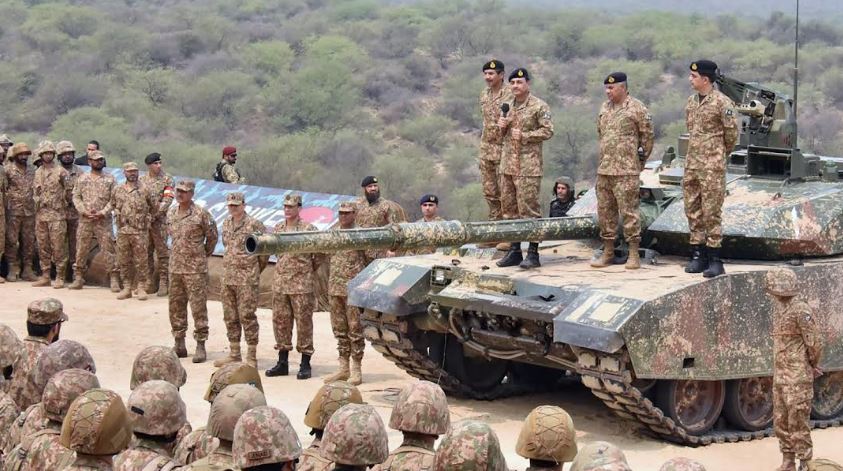
In recent months, particularly after the events of 9 May 2025, Pakistan has undergone a profound transformation. At that critical juncture, the situation was such that Pakistan possessed the capacity to respond in any manner it deemed fit. Yet it chose restraint and upheld the values expected of a responsible state. Significantly, then United States President Donald Trump publicly confirmed that India had approached him in connection with a ceasefire. More recently, the Chinese Foreign Minister has also confirmed that India contacted China to play its role in facilitating the ceasefire. These acknowledgements carry weight, underscoring not only Pakistan’s measured conduct but also the shifting regional and international perception of responsibility and credibility.
Emerging from a period of internal strain, Pakistan today speaks with greater confidence and dignity on the world stage. Its voice is heard with renewed attention, and this change places a corresponding responsibility upon its leadership. The time has come to move beyond symbolic remembrance alone and to firmly convey to the international community that what has been happening in Kashmir for decades cannot be allowed to continue unchecked. The world must be reminded that solemn commitments were made, accepted by both parties, and endorsed unanimously by an international commission comprising respected global powers.
A decisive, principled and diplomatic stand on Kashmir is now imperative. It must be made clear that procedural delays and altered narratives cannot erase documented resolutions or silence the democratic aspirations of an entire people. Peace in South Asia will remain fragile so long as Kashmir remains unresolved. Justice delayed for seventy-five years is not merely justice denied; it is a continuing test of the moral credibility of the international order.