QUETTA, Dec 10 (APP/DNA):Secretary of the Social Welfare and Human Rights Department, Balochistan Asmatullah Qureshi, reaffirmed the government’s dedication to protecting human rights, emphasized efforts to ensure medical, educational, and social justice for women, children, persons with disabilities, and transgender individuals.The Social Welfare and Human Rights Department of Balochistan, in collaboration with the European Union (EU) and the United Nations Development Programme (UNDP), hosted an event to mark International Human Rights Day 2025. The gathering celebrated the fundamental rights of all individuals and highlighted new initiatives for vulnerable groups.
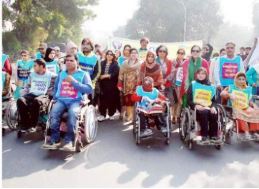
The event brought together government officials, representatives of national and international NGOs, professors, lawyers, scholars, civil society activists, students, and persons with disabilities.
Secretary Asmatullah Qureshi remarked that “resolving these issues is not solely the responsibility of the government; every member of society must play their part,” Qureshi remarked.
Secretary Qureshi outlined several major steps taken by the provincial government including approval of the Early Child Marriage Act to safeguard children’s rights.
The Balochistan government has established Dar-ul-Aman (shelter homes) for women and children and eleven active Child Protection Units across the province.
The KUMAK Program has been launched under the endowment fund to assist persons with disabilities. This program provides academic and technical education, assistance with marriage expenses, interest-free micro-finance loans, monthly stipends and various welfare assistance schemes.
Under the Balochistan Awami Endowment Fund, financial support is provided for treatment of seven life-threatening diseases, including liver and kidney transplants, Thalassemia, severe burns, cancer, cochlear implants, and heart diseases.
The Human Rights Policy 2021 has been approved for Balochistan, and an Action Plan for its implementation in 2026 is currently being developed.
Complaint cells established at the Social Welfare Department, the National Commission for Human Rights (NCHR), and the Provincial Ombudsman’s office.
Speakers including Zulfiqar Durrani (UNDP), Farkhanda Aurangzeb (former NCHR member), Qari Abdul Rasheed, and Asfandyar Badini, Regional Director, Ministry of Human Rights praised the provincial government’s initiatives, particularly the KUMAK Program for persons with disabilities.