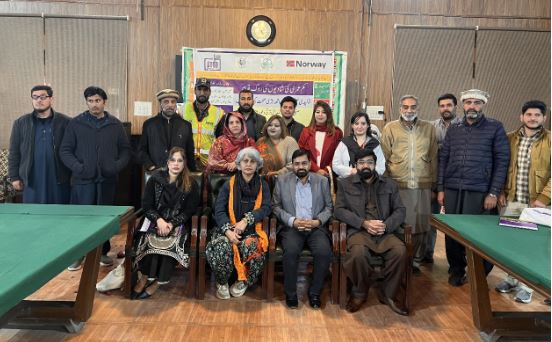
MURREE, DEC 8 /DNA/ – Ending child marriages strengthens families, as girls who marry at an appropriate age are physically and emotionally mature, and possess the knowledge, skills, and resilience needed to manage new roles and responsibilities. These views were expressed during a workshop on reproductive health and the complications associated with early and child marriages. The session highlighted how early marriages negatively affect girls’ education, health, and overall wellbeing, emphasizing the need for community awareness and stronger legal protections.
Agha Zaheer Abbas Sherazi, Deputy Commissioner Murree, and Dr. Azhar Mehmood Abbasi, CEO District Population and Health Department, noted that early marriages deprive girls of their constitutional right to education and expose them to preventable pregnancy-related risks. They stressed that educated and healthy mothers contribute to healthier and more resilient future generations.
Dr. Mariam Ali Abbasi, Women Medical Officer and Incharge Family Planning, Health and Population Department, highlighted serious health complications linked with early marriages, including obstetric fistulas, high blood pressure, eclampsia, and pregnancy-related abnormalities. She emphasized that girls’ bodies are not physically prepared for early pregnancies, putting both mother and newborn at high risk.
Nabeela Aslam, Project Head at PODA, moderated the workshop and reiterated the demand to raise the minimum legal age of marriage for girls to 18 years in Punjab. She noted that Sindh, Balochistan, the Islamabad Capital Territory, and many Muslim-majority countries have already enacted laws setting 18 as the minimum age of marriage for girls, establishing an important precedent for protecting girls’ rights and wellbeing.
Participants recommended conducting more awareness-raising activities and educating parents and communities at all levels. They stressed the importance of involving key stakeholders—including religious scholars, community elders, lawyers, doctors, teachers, lady health workers, girls, and men—to build collective understanding and commitment to ending early marriages.
The workshop saw strong district-level support, with participation from Deputy Commissioner Murree Agha Zaheer Abbas Sherazi, Dr. Azhar Mehmood Abbasi, Deputy District Health Officer Dr. Nauman Shoukat, DEA Sidra Batool, and the Deputy Education Officer.
The activity was conducted by PODA under the project “Reduce Early Marriages to Enhance Gender Equality,” supported by the Royal Norwegian Embassy, Islamabad, with collaboration from the District Health and Population Department.