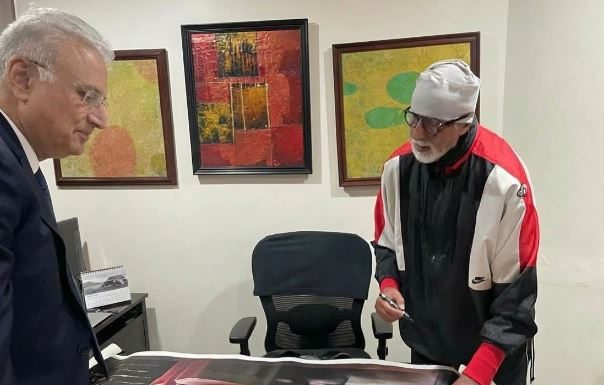
ISLAMABAD, DEC 9 /DNA/ – The Centre for Afghanistan, Middle East and Africa (CAMEA) at the Institute of Strategic Studies, Islamabad (ISSI) organised the launch its latest book, Crossroads of Conflict: Transnational Terrorism from Afghanistan to Africa,’ edited by Dr. Amina Khan. The Chief Guest for the event was Engineer Khurram Dastagir Khan, former Foreign Minister of Pakistan. Distinguished discussants included, Dr. Ishtiaq Ahmed, Professor Emeritus, School of Politics and International Relations, (SPIR), QAU, Dr. Shabana Fayyaz, Professor Defense and Strategic Studies, QAU. Ambassador Sohail Mahmood, Director General, ISSI; Ambassador Khalid Mahmood, Chairman BOG, ISSI; and Dr. Amina Khan, Director CAMEA also spoke on the occasion.
Engineer Khurram Dastagir Khan, in his address, said that Pakistan had faced terrorism for many years, with the APS attack as a notable example. He noted that military operations, including Zarb-e-Azb, Raad-ul-Fasaad, and many others, yet the menace persists. He commended the book for its international scope and detailed analysis, highlighting third-party perspectives across regions, including Africa, Middle East and South West Asia, as well as the issue of foreign fighters in Syria. He observed that past excuses for terrorism, often invoking religion, are still echoed today. He praised the authors for addressing the subject comprehensively, stressing that solutions require tackling root causes, strengthening regional cooperation, investing in education, and countering online propaganda. He concluded that while Pakistan has pushed back transnational terrorism, continued efforts remain necessary to effectively push back the recent upsurge.
Ambassador Sohail Mahmood, while speaking on the occasion, said the publication appeared at a time when global security was turbulent and transnational terrorism was expanding in reach and complexity. He noted that in the experts’ views analyzing the phenomenon of transnational terrorism across multiple geographies, instability, fragile political transitions, and socio-economic disparities had allowed violent extremist groups to adapt and extend their influence. He stated that the book provided an authoritative contribution by examining the trajectories of major terrorist organisations, including Al Qaeda, ISIS and its affiliates, ISKP, Boko Haram, Al Shabaab, and TTP, offering insights into their ideology, behaviour patterns, recruitment, and trans-border linkages. He underlined that, extremis, and terrorism was rooted in poverty, exclusion, weak governance, instability, external interventions, and unresolved disputes fueling conflict, requiring deterrence, development, inclusive governance, dialogue, and investment in human security. He further said the book objectively assessed national, regional, and multilateral counter-terrorism frameworks, highlighting gaps such as insufficient coordination, inconsistent political will, competing priorities, and uneven institutional capacity. He emphasized the importance of a coherent approach combining security, diplomacy, law enforcement, development, and community engagement. Noting the subject’s significance for Pakistan, which had confronted terrorism with unshakeable resolve and immense sacrifices, he reiterated that terrorism in all forms must be rejected and defeated, and reaffirmed advocacy for regional cooperation, better border management, intelligence coordination, and peaceful resolution of conflicts. He commended the contributors, and expressed hope the volume would serve as a useful resource.
Dr. Amina Khan, while introducing the book, said CAMEA’s 5th edited volume, Crossroads of Conflict, comes at a time when transnational terrorism remains a pressing challenge. She noted that it provides evidence-based analysis of groups from Al Qaeda and ISIS to regional actors such as Al-Shabaab, Boko Haram, TTP, ISKP, and ETIM, while examining the political conditions enabling their resilience. She added that the work reflects CAMEA’s commitment to informed scholarship and thanked the authors, discussants, and her team for contributing to a publication supporting coherent, context-specific policy thinking.
Dr. Shabana Fayyaz said the book is commendable with a clear theme. She noted that the interplay between conflict and terrorism remains unresolved and emphasized that transnational terrorism requires global solutions, complicated by major power contestation. She observed that the book could have addressed gender and stressed the need to involve society, questioning which segments should be engaged. She added that we live in a digitally polarized world and concluded that the indigenous definition of terrorism remains an enigma.
Dr. Ishtiaq Ahmad, in his remarks, commended CAMEA for a timely and substantive volume. He noted that terrorism is a trans-regional ecosystem, with groups like TTP and BLA exploiting porous borders. He highlighted the adaptability of militants from ISKP to Al-Shabaab and stressed that military action alone cannot ensure lasting results. He emphasized the link between militancy and state fragility, urging attention to grievances in Balochistan and Khyber Pakhtunkhwa. He concluded that the volume offers diverse perspectives.
Ambassador Khalid Mahmood said the book provides a holistic perspective. He stressed the need to address root causes of terrorism, state-sponsored terrorism, and affirmed that the right of self-determination, as recognized by the UN, cannot be equated with terrorism. He also highlighted that terrorism has no link with any religion.
During the discussion, several contributing authors shared their perspectives on their respective chapters, highlighting key insights, analyses, and findings from their research. The event was attended by a cross-section of participants, including academics, practitioners, foreign diplomats, and members of civil society and the media.