Pakistan has formally decided to withdraw from the much-delayed Turkmenistan-Afghanistan-Pakistan-India (TAPI) gas pipeline project, finally acknowledging what experts and observers had long argued: the project was never feasible as long as India remained a key stakeholder.
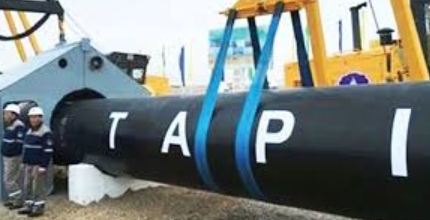
The $10 billion, 1,800-kilometer pipeline was once hailed as a major energy corridor linking Central Asia with South Asia. For more than two decades, TAPI was projected as a game-changer that could provide Pakistan with up to 1.3 billion cubic feet of natural gas per day, easing the country’s chronic energy shortages. Yet, despite repeated rounds of discussions, political statements, and official assurances, the project never progressed beyond paper.
Pakistan’s decision to step away from TAPI comes after years of frustration over delays, impractical conditions, and strategic concerns. The Islamabad Post, in its September 6 edition, had highlighted in detail the structural and political weaknesses that made the project unworkable from the very beginning.
From the outset, TAPI was marred by geopolitical contradictions. Pakistan’s energy security concerns were at odds with India’s participation in the project. Officials in Islamabad had long maintained that the pipeline could never deliver net benefits to Pakistan as long as India was part of it. Instead, Islamabad would risk being locked into an arrangement where transit revenues and strategic leverage could tilt in India’s favor.
“India’s inclusion made the project politically toxic for Pakistan,” noted one senior energy analyst. “It was unrealistic to expect Islamabad to tie its energy future to a pipeline that relied on cooperation with its arch-rival.”
This newspaper has consistently argued that Pakistan’s energy security must not be contingent on arrangements that strengthen India’s strategic hand. The government’s latest decision vindicates that position.
Another major irritant was Turkmenistan’s insistence on keeping India as a permanent part of the project. Islamabad reportedly urged Ashgabat to reconsider the configuration, at least until bilateral relations between Pakistan and India improved. But Turkmen officials consistently refused to de-link India from TAPI, even when it became clear that New Delhi had lost much of its initial enthusiasm for the project.
According to sources, Turkmenistan’s rigid approach “annoyed” Pakistan and contributed directly to Islamabad’s withdrawal decision. The Turkmen side appeared more interested in projecting TAPI as a regional initiative with four stakeholders, rather than pragmatically rethinking its composition to suit the ground realities.
Equally frustrating for Pakistan was Turkmenistan’s half-hearted engagement with the project. While Ashgabat frequently reaffirmed its commitment in official statements, its practical efforts to push the project forward were minimal.
Officials in Islamabad say Turkmenistan failed to pursue the case effectively with Pakistani authorities. Critical negotiations on tariffs, security guarantees, and payment mechanisms were repeatedly delayed or left unresolved. This lack of seriousness further eroded confidence in the project.
Adding to the problem were persistent communication issues between Turkmenistan’s diplomatic staff in Islamabad and Pakistani counterparts. Officials describe a “disconnect” that slowed decision-making and made coordination difficult. In an initiative as complex as TAPI, such lapses proved fatal.
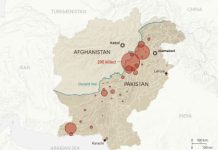
Even beyond India’s involvement and Turkmenistan’s lack of interest, serious feasibility concerns dogged the project. The pipeline’s proposed route through Afghanistan was always vulnerable to instability, insurgency, and political uncertainty. The idea of securing nearly 800 kilometers of pipeline in Afghan territory was never realistic.
Financially too, the project raised questions. The cost estimates of around $10 billion were widely seen as optimistic. Financing such a large cross-border infrastructure project required strong guarantees and investor confidence, both of which were absent.
For Pakistan, the ultimate realization was that the costs of pursuing TAPI far outweighed the potential benefits. Energy experts argue that even if the pipeline had materialized, Pakistan risked paying more for gas than alternative sources, especially with global energy markets shifting towards LNG and renewable options.
“Pakistan would have ended up subsidizing a geopolitical dream that had little grounding in economic reality,” one official commented. “The project was more about symbolism than substance.”
The Islamabad Post had been warning for years that TAPI was not viable under its current configuration. Our September 6 report specifically pointed to the obstacles posed by India’s inclusion, Turkmenistan’s inflexibility, and lack of sustained engagement from Ashgabat.
Pakistan’s formal withdrawal now confirms those assessments. The decision marks the end of an initiative that many had already written off, but which continued to consume diplomatic energy and political capital.
With TAPI off the table, Pakistan is expected to focus on more realistic and flexible energy options. These may include expanding LNG infrastructure, strengthening ties with Qatar and other LNG suppliers, reviving talks on the Iran-Pakistan (IP) gas pipeline, and accelerating investment in renewable energy.
While the collapse of TAPI is a setback in terms of lost time, officials argue it also clears the way for more practical solutions. By officially withdrawing, Pakistan can reallocate its limited resources and political attention to projects that are economically viable and strategically secure.
Pakistan’s decision to pull out of TAPI is neither sudden nor surprising. It is the logical outcome of years of impractical planning, geopolitical contradictions, and lack of seriousness from key stakeholders. India’s involvement was always the central stumbling block, compounded by Turkmenistan’s rigidity and disinterest.
In the end, Pakistan has chosen pragmatism over illusion. While TAPI will remain a “dream project” in regional energy diplomacy, for Pakistan, it has always been a non-starter. By stepping away now, Islamabad is signaling a shift towards energy strategies rooted in reality rather than rhetoric.