Home Blog Page 1046

Diplomatic Milestone: Pakistan-China friendship enhanced with CPEC Corner unveiling

Pakistan-China friendship enhanced with CPEC Corner unveiling

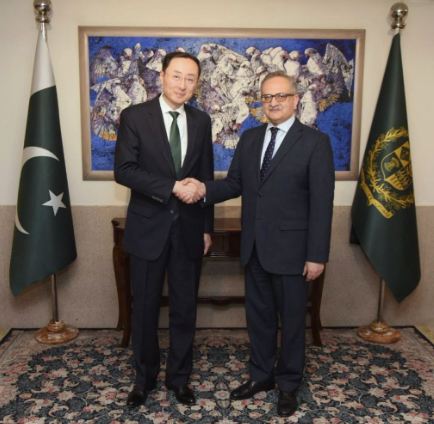
ISLAMABAD, JAN 20 /DNA/ – Foreign Secretary Muhammad Syrus Sajjad Qazi and Chinese Vice Foreign Minister Sun Weidong, who is currently on a visit to Islamabad, today inaugurated the CPEC Corner at the library of the Ministry of Foreign Affairs.

Speaking on the occasion, Chinese Vice Foreign Minister said that as iron brother and trusted friend, China attached special importance to Pakistan in its foreign policy and looked forward to further strengthening strategic ties between the two countries.

Thanking Pakistan’s support to China on its core issues, Vice Foreign Minister Sun reaffirmed China’s support for Pakistan’s sovereignty and territorial integrity and for Pakistan’s economic development, progress and prosperity.

Welcoming Vice Foreign Minister Sun to Pakistan, the Foreign Secretary said that Pakistan-China friendship enjoyed complete political, institutional and public support in Pakistan. Underscoring the salience of bilateral friendship for regional peace and stability, he expressed Pakistan’s readiness to further expand and strengthen bilateral ties in all areas of cooperation.

The Unsettling Reality of Employee Exploitation

The Unsettling Reality of Employee Exploitation

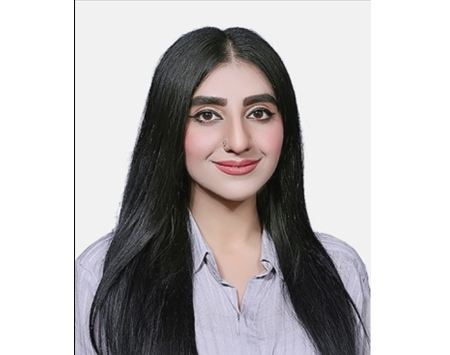
By: Zahra Ali

Employee exploitation, characterized by low salaries and excessive work demands continues to be a pervasive issue that undermines the principles of fair labor practices and human dignity where employees are being subject to meager wages and arduous workloads that compromise their well-being and contribute to a cycle of economic inequality.

One of the primary manifestations of employee exploitation is the prevalence of low salaries. Despite the essential role employees play in driving the success of workplaces, many find themselves earning wages that fall far below what is considered a living wage. This inadequacy often forces employees into precarious financial situations, struggling to meet basic needs such as housing, healthcare, and education for themselves and their families.

Companies engaging in exploitative practices justify low salaries by citing market forces, budget constraints, or the need for competitiveness. However, this argument disregards the ethical responsibility of workplaces to ensure that their employees can lead dignified lives. The consequences of low salaries extend beyond individual hardship, contributing to societal issues such as increased poverty rates and income inequality.

In addition to low salaries, many employees face the burden of excessive work demands, akin to being made to overwork. Long working hours, unrealistic expectations, and limited breaks contribute to a toxic work environment that can have severe physical and mental health repercussions. The demand for heightened productivity often results in burnout, stress-related illnesses, and an overall decline in the well-being of employees.

Companies may rationalize these conditions as necessary for meeting workplace goals or industry standards. However, the exploitation of employees in this manner disregards the importance of a healthy work-life balance and undermines the long-term sustainability of both individuals and the organization. The toll on employee morale and motivation can lead to reduced productivity, high turnover rates, and a negative impact on the company’s reputation.

Several factors contribute to the perpetuation of employee exploitation, including lax labor laws, lack of collective bargaining power, and a culture that prioritizes profit over the well-being of workers. The consequences of this exploitation are far-reaching and impact not only the individuals directly affected but also society at large. Income inequality widens, perpetuating a cycle of poverty, and social cohesion weakens as trust in employers and institutions erodes.

Addressing the issue of employee exploitation requires a concerted effort from governments, businesses, and society as a whole. Implementing and enforcing fair labor laws, promoting ethical business practices, and fostering a culture that prioritizes the well-being of employees are crucial steps in breaking the cycle of exploitation. By acknowledging the dignity of work and the rights of employees, a more just and equitable society can be created where individuals are not treated like “donkeys” but are valued contributors to the success of their workplaces and communities.

Seminar on Enhancing Education Effectiveness held at IoBM

Seminar on Enhancing Education Effectiveness held at IoBM

DNA

Karachi: The Quality Enhancement Cell (QEC) at the Institute of Business Management (IoBM), Karachi organized a seminar on Enhancing Education Effectiveness on January 18, 2024. Invited as esteemed speakers were Mr. Saleemuddin, Director Quality Assurance, Sindh Higher Education Commission (HEC); Mr. Yousaf Jamil, Director QEC, Iqra University, and Dr. Arshia Samin Naqvi, Director QEC, Sohail University. The speakers discussed the methodology of pursuing QS Ranking by the Higher Education Institutes (HEIs) and what steps can be taken to foster an environment of academic and research learning, faculty development, and uplifting the impact of education. Present on the occasion were IoBM’s Acting Rector, Dr. Tariq Rahim Soomro, Director QEC, Dr. Shahid Amjad, along with the representatives of the QEC of various HEIs of Karachi and the faculty and management of IoBM.

While presenting the opening remarks, Dr. Shahid Amjad elaborated on the accomplishments and activities of IoBM’s QEC. During his presentation, Mr. Muhammad Yousaf Jamil shared the strategies that the HEIs must follow when pursuing to be ranked in the QS Rankings. These include academic reputation, employer reputation, employment outcomes, citations per faculty, faculty-student ratio, international students, and international faculty. He presented in detail how to implement each of these strategies.

While addressing the audience, Dr. Arshia highlighted Institutional Performance Effectiveness. She said rankings are useful for creating a competitive environment among HEIs, helping in improving quality and enabling stability. She added that higher education has been forced into a highly competitive business environment due to globalization, the fourth industrial revolution, high demand for higher education, and increased competition. Mr. Saleemuddin shared the Quality Assurance Initiatives taken by Sindh HEC including training, SDG-focused activities, strategic plans for higher education institutions, formulation of KPIs for senior positions of HEIs, and certified reviewers’ training. While presenting the vote of thanks, Dr. Tariq Rahim Soomro said that through collaboration and cooperation, the HEIs can work to enhance Pakistan’s education landscape. The event was organized by IoBM’s QEC team including Atif Shahab Butt, Manager QA, along with Maria Asad, and Dania Raheel.

SCCI, Tajikistan delegation agree to hold a catalog show to highlight investment potentials

Sarhad Chamber of Commerce and Industry

SAID ALAM KHAN

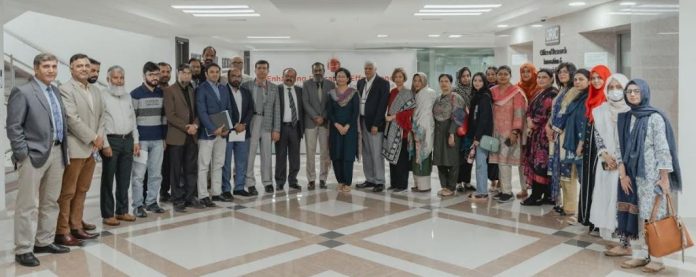
PESHAWAR: Sarhad Chamber of Commerce and Industry Vice President Ijaz Khan Afridi and a businessmen delegation from Tajikistan have agreed to launch joint initiatives to hold catalog show, aiming at highlighting investment potentials of Khyber Pakhtunkhwa and Tajikistan through chamber platform.

Besides, both sides have shown commitment to make efforts to bring the business community of Pakistan and Tajikistan closer to each other.

Ijaz Khan Afridi invited Tajikistan companies to make investments in potential sectors, like hydel power generation, tourism, mine and mineral agriculture, oil and gas and industries and trade.

According to a press release here, a meeting between SCCI Vice president Ijaz Khan Afridi and a leading businessman of Tajikistan Mr Abdur Rahmon Abdu Jabborov was held at the chamber house here on Saturday.

The meeting was attended by Mr Muhammadjon Eidozada, Dr Muqbool, Secretary General of the chamber Sajjad Aziz, members of the business community and others.

Participants of the meeting discussed the potentials of Pakistan/Khyber Pakhtunkhwa and Tajikistan and modalities to further strengthen bilateral trade and economic relations.

The meeting was told that huge investment opportunities were available in KP’s potential sectors and emphasized the need for bringing business community of Pakistan/KP and Tajikistan closer to each other and to hold a catalog show, consisting on products of the both countries at chamber house, provision facilitation to business community and promotion of mutual trade.

Prospects are brighter to enhance bilateral trade between Pakistan/KP and Tajikistan, says Afridi while commenting during the meeting, stressing the need for taking mutual benefits from each other’s experience for trade promotion between the two countries.

The SCCI vice president said Khyber Pakhtunkhwa/Peshawar is a gateway to Afghanistan and Central Asian Republic, stating that our province is a lucrative destination for local and foreign investments and invited the Tajikistan investors to make investment in potential sectors in K-P.

Ijaz Afridi assured measures would be taken under the SCCI platform to facilitate Tajikistan investors under one window operation, highlighting potentials of both countries and hurdles in the mutual trade.

Mr Jabborov said vast opportunities exist to make investment in various sectors in Tajikistan, saying that his country wanted to further enhance bilateral trade with Pakistan.

He said the atmosphere for Pakistani investors is highly favorable, adding that foreign companies have made huge investments in Tajikistan.

Therefore, he asked the Pakistan/KP investors to take full benefits for investment opportunities in Tajikistan and play their proactive role in improving bilateral trade relations between the two countries.

A judge who is affected by social media, violates his oath: Athar Minallah

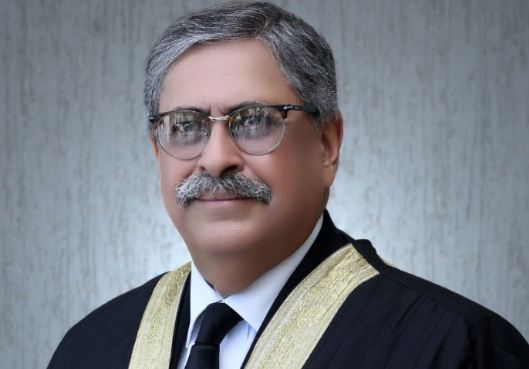
Supreme Court Justice Athar Minallah

ISLAMABAD, JAN 20 /DNA/ – Supreme Court Justice Athar Minallah on Saturday said social media should not influence judges, adding that if a judge is affected by it then they are violating their oath.

Addressing the second law bridge workshop on superior court reporting at a private hotel in Islamabad, Justice Minallah said if even critics trusted the court then it was a test of the judiciary. Everyone should criticise, but also trust the judiciary, he maintained.

Referring to the lack of freedom of speech in the country, the top court judge said the endless process of censor kicked off after the state’s censoring Quaid-e-Azam Muhammad Ali Jinnah’s August 11, 1947 speech.

Reminiscing his first case as a judge, he said it was a bail plea and a 16-year-old suspect was before the court for putting up a banner against an apex court judge. The subordinate court rejected the plea saying he had committed a crime against the entire judiciary, he said adding that nobody tried to find out who got the banners made.

The SC judge said Pakistan would not have been split into two, if the oath was not transgressed.

He said the states could not control the expression of opinion in the technological era. However, he said the reporters doing vlogging have an economic interest too therefore they should maintain balance in their comments.

Justice Minallah said he did not consider himself worthy of telling a reporter what his ethics were.

However, he advised the journalists that revealing the identity of a child or woman or misreporting something was a violation of the journalism’s ethics, he said adding that he learnt a great deal of journalism from court reporters.

“When the matter of 18th constitutional amendment was raised, many forces were against it. A reporter asked me, what will the Supreme Court do about the 18th Amendment? I replied ‘in my opinion, the SC should not interfere in the constitutional amendment’,” he said.

The apex court judge said he had said he would resign if the 18th amendment was annulled and the next day news was published that “Athar Minallah has threatened the court”.

Senior lawyer Aitzaz Ahsan asked him to do something against the news, but he said no that’s what he had said, he added.

Citing former Ugandan president and the modern world history’s most brutal dictator, Idi Amin, Justice Minallah said, “A society is ruined, if someone gags freedom of expression like Idi Amin.”=DNA

Shoaib Malik ties the knot with Sana Javed

Shoaib Malik ties the knot with Sana Javed

ISLAMABAD, JAN 20 /DNA/ – People were left surprised after Pakistan cricketer Shoaib Malik announced his third marriage to actress Sana Javed on Saturday in an intimate ceremony.

And We created you in pairs,” wrote the 41-year-old cricketer on his Instagram account.

Soon after the announcement, Sana Javed changed her Instagram bio to “Sana Shoaib Malik”.

The newlywed couple shared pictures of their wedding event. Shoaib and Sana wore matching outfits for the big event.

The cricketer sported a white sherwani with a golden embroidered shawl while the bride wore a beige-coloured lehnga with green and gold jewellery.

The couple could also be seen wearing wedding bands.

Malik’s manager, Arsalan Shah, also confirmed the news on X.

“Confirmation: Our beloved superstar @realshoaibmalik has tied the knot (Nikkah) with #SanaJaved. Wishing the new couple an amazing life ahead filled with happiness and joy! #ShoaibMalik”

Formerly called the power couple, Shoaib and Sania, remained in the headlines for quite a time since 2022 following the reports of their separation.

Shoaib and Sana were rumoured to have been divorced with both keeping mum on the matter to date reportedly due to agreements. None of them publically verified their relationship status amid the speculations.

The internet, however, has since remained curious about the sports pair’s personal life, often prying into their very private affairs.

The couple tied the knot in 2010 and welcomed their son, Izhan Mirza-Malik in 2018.

Despite the fans noticing some distance between the two, the cricketer rubbished the rumours multiple times and even posted messages for Sania on social media in a span of four to five months.=DNA

=================

South African youth soccer team touches down in Pakistan for under 21 friendly matches

South African youth soccer team

DNA

ISLAMABAD: Under 21 Soccer Team Visit. South African youth Soccer Club Umdumezulu United from South Africa arrived Pakistan on 19th January 2024.

The visitors are an amateur under 21 soccer team and landed in Karachi. The second leg of the visit will be friendly matches in Islamabad from 22 January 2024.

This is yet another initiative of the South African High Commission, Islamabad to promote people to people contact between Pakistan and South Africa.

This follows on the heels of a visit to South Africa by a Pakistani under 19 amateur cricket which took place in September 2023. The key character of this initiative is that it is the team comprises of underprivileged young people who may not have been able to dream of visiting their capital cities let alone abroad.

The cricket initiative referred to above bore the same character. Thanks to Mr Majid Ahmed (Honorary Consul: South Africa in Karachi) for making the cricket team visit a success. This event has been in the making for almost 2 years. We are happy to see it happening, finally. I thank Mr.Mubasher Sanjrani for working so hard to organize this event. My gratitude goes to Ms. Farah of Globe Travel, who added the much-needed impetus this initiative.

Again, Mr.Majid Ahmed extended a helping hand. I thank all the Pakistani diaspora in South Africa for lending a hand equally so, to the South African businesses people. Last but not the least, I thank the Pakistani High Commissioner to South Africa for his support.

Data revolution for SDGs

CIA meeting held to review performance

Last month, I attended two workshops organized by the Pakistan Bureau of Statistics (PBS) on user-producer dialogue to sense data needs and calibrate with statistical products – a commendable step towards making official statistics demand-driven.

This reminded me of the UN initiative on data revolution to fully integrate statistics into decision-making and promote open access and use of data. Data matters because it can see, hear, feel, whisper, and even shout; it reflects human life with its joy, sorrow, and success; it tells a lot if we can give it an honest voice.

Planners face many challenges and contradictions, and the future will not be less challenging, but it will remain promising, as data accessibility has no limits. Good data strengthens the strategic foundations of planning and gives confidence to turbocharge operations, while a lack of data clogs the processes and undermines trust in statistical systems. The dual question at hand is about data ecosystem and accessibility that allow users to access, understand, analyze, use, reuse, and link data to identify current and future challenges.

In a global context, the endorsement of the amendments to Pakistan’s statistics law in 2011 and the development of the national strategy for the development of statistics (NSDS) provided a very modernized legal framework and strategic direction. Yet implementing the law and the NSDS remains a challenge due to fragmented efforts and bureaucratic processes. The current national statistical system (NSS) follows the textbook traditional supply-driven approach. It is centered at the PBS as a strong and capable statistical office and in provincial statistical bureaus but there is a dire need for modernization and capacity. In the data landscape, the private sector is left behind, although it is a major partner as a provider and user of data. According to the World Bank’s Statistical Performance Indicator (SPI) measuring statistical services, products, sources and infrastructure, Pakistan scored a 61 per cent ranking globally after India (67), Malaysia (65), Egypt (57), and Turkey (29).

On the supply side, although various statistical reports are published, access to digital data and timeliness of dissemination remain the key challenges. In addition, updated, disaggregated and user-friendly is not easily available; for example, the latest available data on maternal mortality is from 2019, contraceptive prevalence is from 2018 and unemployment is from 2021.

Data at the district level is rarely available which is particularly significant considering the wide disparities across districts. For example, Hyderabad district is performing four times better than Rajanpur district on the UNFPA Reproductive Provisional Health Index (RHI). More broadly, Pakistan produces data on few SDG indicators; according to the SDGs unit, only 60 indicators are covered by official statistics sources.

The completion of a digital census in Pakistan was a great step forward from a supply perspective, but a full digital transformation including digital dissemination must be introduced to eliminate slow and hard-wired procedures. In a high-speed world, many users are not interested in reading long statistical reports and detailed tables and are instead more attracted to synthesized and customized information.

Pakistan’s statistical sources are not on the primary list in search engine results even for simple searches on reproductive health and mortality indicators. This means dissemination and presentation functions require modernization and optimization. On the research front, the data ecosystem is a key enabler for R&D. Pakistan spends only 0.16 per cent of its GDP on R&D, while India spends four times more and Turkey spends eight times.

On the demand side, there is a huge user demand for digital data, but there may be a lack of capacity to do their own analysis. The future demand for data goes beyond the capability of the current statistical system and data ecosystem; it speaks to artificial intelligence and machine learning. Such a technology-driven future will demand better functional literacy that equips people with the capacity for effective functions for self and community development. Also, having statistical analysis on the education of girls and boys can be an important step so their skills fit the future labor market needs. For example, data can tell us why women are stuck in the use of traditional contraceptives and not transiting to modern methods.

At the political level, creating a data-driven culture requires that the national statistical system is trusted as professionally independent, technically capable, politically unbiased, and away from any form of interference. Trust is earned not imposed; good practices reveal that statistical authority should be independent. Statistical independence was defined by the UN Fundamental Principles for Official Statistics as having full control over methods and technical decisions including what, when, and which level of details of the disseminated statistics.

No other authority should ‘approve or disapprove’ a statistical product, given the administrative, organizational, and accountability arrangements of the statistical office within the government structure. Statistics are ‘public goods’ to which everyone including institutions, politicians, government, civil society and the public at large has access at the same time and the same level of detail. Statistics are a pointer for public debate, not the opposite.

Pakistan is in dire need of a state-of-the-art, proactive, digitalized, and innovative data ecosystem to provide a digestible presentation of relevant and real-time information. It will create a culture of public debate on data, empower evidence-based decision-making, provide an analytical and research environment, contribute to effective monitoring of SDG indicators, and enforce the 2017 Act on the right of access to information. It is time to modernize.

20 January 1990 – Road to Victory

20 January 1990 – Road to Victory

Today marks the 34th anniversary of the tragedy of January 20, 1990. This tragedy, which entered history as Bloody January, is not only a tragedy for the people of Azerbaijan but also an honorable page in the history of the people who are ready to make any sacrifices to protect their dignity.The tragedy of 20 January is engraved in the history of Azerbaijan as both a national tragedy and the peak of the national liberation movement of Azerbaijani people for independence and freedom.

The Soviet army sent to the country in order to forcefully suppress the mass protests of the Azerbaijani people and the national independence movement started in response to the discrimination policy of the USSR leadership against the people of Azerbaijan, the deportation of hundreds of thousands of Azerbaijanis from their historical lands in the territory of present-day Armenia, and Armenia’s unfounded territorial claims against Karabakh region of Azerbaijan, committed an unprecedented massacre against the civilian population grossly violating international law and the Constitution.Armed forces killed more than 100 civilians mercilessly regardless of their nationality, age, or sex, including children, women, and elderly, 744 peaceful, innocent people were wounded in the capital city of Baku and surrounding areas, hundreds went missing and 841 persons were unlawfully imprisoned. Even the ambulances and physicians carrying the injured persons were fired on, therefore medical staff became martyrs or were injured. 21 people were killed after the declaration of a state of emergency on January 20.

On January 21, 1990, immediately after the tragic events, at the Permanent Mission of Azerbaijan in Moscow, National Leader Heydar Aliyev, demonstrating his solidarity with the Azerbaijani people, strongly condemned the crime committed against the Azerbaijani people, demanded political and legal assessment of the massacre, and punishment of the perpetrators.

At the special session of the MilliMajlis (Parliament) of the Republic of Azerbaijan held in February 1994 the brutal killing of innocent people on 20 January 1990 was qualified as military aggression and a crime, and in March 1994 a decision “On the tragic events committed in Baku on 20 January 1990” was adopted. 20 January was declared the National Mourning Day.

The hard, difficult, but honorable path that began in 1990 reached its most important peak in November 2020. Under the leadership of President Ilham Aliyev, the Azerbaijani Army liberated the occupied territories from Armenian occupation in 44 days. And after successful local anti-terrorism measures conducted by the Armed Forces of Azerbaijan on September 19, 2023, separatism and terrorism were eliminated from Karabakhand  Azerbaijan fully restored its sovereignty.

The young people who came to the Alley of Martyrs wrote a heroic epic themselves. They restored the territorial integrity of Azerbaijan and ensured its independence and sovereignty.

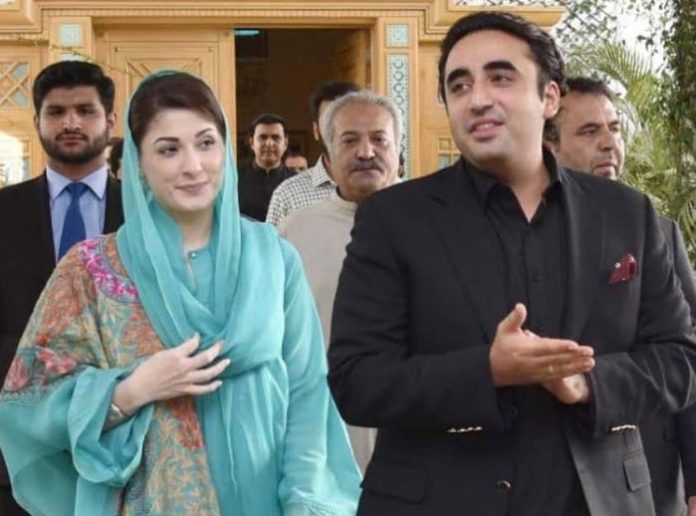
Bilawal hits out at Nawaz: Maryam lauds her father’s steadfastness

Bilawal hits out at Nawaz: Maryam lauds her father’s steadfastness

Bilawal Bhutto also announced launching a programme at union council level to eradicate hunger in the country

DNA

RAHIM YAR KHAN: Pakistan Peoples Party (PPP) Chairman Bilawal Bhutto Zardari on Friday took a dig at Pakistan Muslim League-Nawaz supremo Nawaz Sharif as election campaign goes full throttle in the country.

Appreciating the party supporters’ enthusiasm at Liaquatpur rally, the former foreign minister said Sharif was spotted in PML-N’s rally in Hafizabad a day earlier and, “I fear he may again return to his den after seeing you”.

While wielding a copy of his party’s manifesto that primarily focus on economic uplift of public, Bhutto said no other party was paying heed to the difficulties being faced by people.

He highlighted the key points of the PPP manifesto, saying 17 ministries will be abolished in order save Rs300 billion for public. He vowed to redirect the Rs1,500 billion given to elite in wake of subsidy toward public.

He als promised to implement the 10-point manifesto of his party in letter and spirit once he is voted to power by people on Feb 8.

He also shared his plans to assist the youth, saying they will be helped by the state through “youth card” if the PPP managed to make the government in centre.

Bilawal Bhutto also announced launching a programme at union council level to eradicate hunger in the country.

Meanwhile, Pakistan Muslim League Senior Vice President and Chief Organiser Maryam Nawaz Sharif heaped praise on the steadfastness of the party despite facing a litany of challenges.

She emphasised, “good and bad times are very part of politics but the PML-N has not left the field and is always ready to serve the masses with a renewed zeal.”

She made these remarks while addressing a rally in Khanewal where the PML-N chief organiser said she could not be more grateful as a lot of people have come to attend the PML-N’s power show despite the inclemency of the weather.

Counting his difficulties, she said she was informed about the death of her mother in Adiala Jail but the support she has always received from the party and the people has increased her determination for service.

Talking about the challenges faced by the PTI, she said who gave PTI the impetus to attack the state on May 9, who asked it to abstain from the intra-party polls besides adding only the PML-N could have faced significant challenges with heroism as the party has always enjoyed the support of people.

PML-N senior vice president said Nawaz Sharif was not taking revenge from the PTI founder as the former has left his matter at the hands of Almighty.

Stay Connected

64FansLike
60FollowersFollow

Latest Reviews

Exchange Rates

USD - United States Dollar
EUR
1.17
GBP
1.35
AUD
0.72
CAD
0.73