Home Blog Page 1043

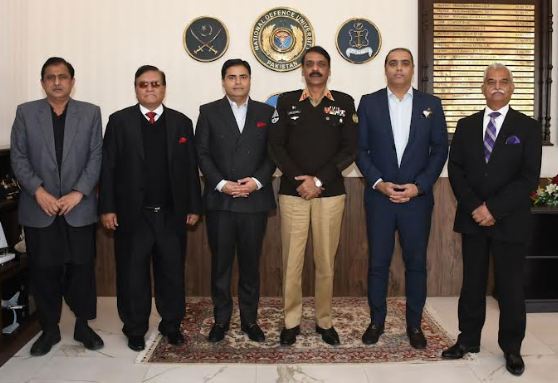
ICCI President greets Lt. Gen. Asif Ghafoor on NDU presidency appointment

ICCI

ISLAMABAD, JAN 24 /DNA/ – Ahsan Zafar Bakhtawari, President, Islamabad Chamber of Commerce and Industry (ICCI) leading a delegation visited the National Defense University (NDU) and congratulated Lt. Gen. Asif Ghafoor on his appointment as the President of the University. Faad Waheed, Senior Vice President ICCI, Khalid Iqbal Malik Group Leader, Zafar Bakhtawari former President ICCI and Secretary General UBG Pakistan and Ajmal Baloch, President All Pakistan Anjuman Tajaran were in the delegation.

Talking to the delegation, Lieutenant General Asif Ghafoor, President, National Defense University Islamabad lauded the important role of the business community in the economic development of the country. He said that the business community of Pakistan should invest in the backward areas of the country including Balochistan, which will improve the local infrastructure, create new jobs, reduce poverty, and bring prosperity to the people. He said that the business community should fully cooperate with the incoming government and give suggestions to create a favorable business environment so that through public-private sector efforts, Pakistan can be taken out of difficulties and put on the path of sustainable economic development. Expressing his opinion regarding the recent tension between Pakistan and Iran, he said that the two countries are bound in historical friendship and soon their relations will be normalized. He assured that prominent business leaders will be invited to important programs of NDU to share their success stories with the students.

Speaking on the occasion, Ahsan Zafar Bakhtawari, President, Islamabad Chamber of Commerce and Industry said that the security and development of Pakistan depend on a strong economy and the business community would work with the government to improve the economy. He said ICCI may be given a permanent seat in the National Security Workshop and ICCI members may be invited to the important programs of NDU to share their success stories for the motivation of the students. He said that ICCI in collaboration with NDU will try to organize a seminar for the benefit of the students.

Faad Waheed, Senior Vice President ICCI, appreciated the efforts of NDU in the field of education and research to produce future leaders in the public and private sectors and assured of the support of the business community to promote NDU’s mission and objectives.

Khalid Iqbal Malik Group Leader ICCI, Zafar Bakhtawari former President and Secretary General UBG Pakistan, and Ajmal Baloch President All Pakistan Anjuman Tajaran also spoke on the occasion and assured that the business community would always support all endeavors of the government to make Pakistan a strong economy in the region. 

Pakistan urges ‘concrete’ UN steps to end Israeli Gaza slaughter; pushes for 2-state solution

Pakistan urges 'concrete' UN steps to end Israeli Gaza slaughter

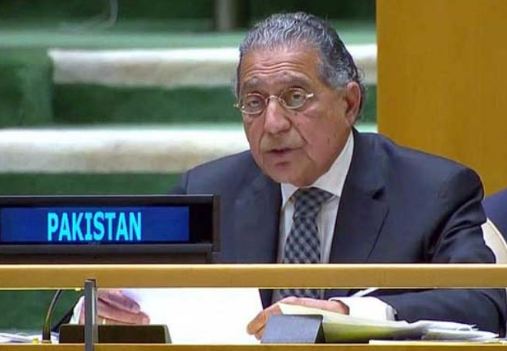
UNITED NATIONS, Jan 24 (APP/DNA) – A senior Pakistani diplomat has called for “concrete steps” by the United Nations to stop the Israeli slaughter of the people in Gaza, as he underscored that a lasting end to the Israeli-Palestinian conflict can only come through a two-state solution.

“It is now time for the Security Council, for the entire membership of the United Nations, to consider measures by which to reverse this wanton rejection of peace,” Ambassador Munir Akram told the 15-member body on Tuesday, referring to the repudiation of the two-state formula by Israel.

“We hope the Council will be able, finally, to adopt a resolution demanding a complete cessation of hostilities, full access to humanitarian assistance for the besieged population of Gaza, and international protection for the Palestinian people,” he said in a high-level Council debate on the Middle East crisis.

Tuesday’s meeting featured more than 60 speakers, including many ministers, who discussed the need for a humanitarian ceasefire, the urgency with which to scale up aid, the importance of pursuing a two-State solution and the imperative to avoid further regional escalation.

Deploring Israel’s defiance of world opinion, Ambassador Akram said, “If the Israeli leadership persists in refusing peace, the Security Council, the General Assembly, and indeed all UN Member States, must take steps to hold it accountable.

“There are numerous precedents of measures that can be taken to persuade compliance with decisions of the Security Council and the General Assembly, the Pakistani envoy added, without specifying those steps.

“In order to ensure the inevitability of the two-State solution, it is also time to admit Palestine as a full member of the United Nations,” he stressed. Palestine currently has observer status at the U.N.

 “Unfortunately, despite world opinion, despite the advice of its closest allies, and of many of its own people, the extremist Israeli leadership remains adamant in continuing this brutal war and rejecting the prospect of a Palestinian State and the two-State solution,” Ambassador Akram said.

“This will consign the Middle East to perpetual conflict.”

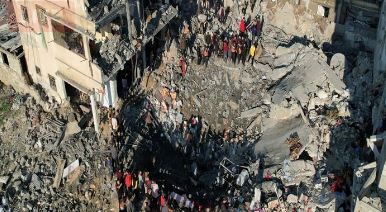
Describing the harrowing situation left behind by relentless Israeli bombardments of Gaza, Ambassador Akram said, “This brutal and indiscriminate killing of innocents, and the suffering imposed on an entire population, amounts to genocide, as asserted in the case filed by South Africa in the ICJ (International Court of Justice, which is based in the Hague).

“Every tenet of international humanitarian law has been violated by the Israeli occupation,” he told delegates from around the world.

“It is sad that, despite the calls by the General Assembly in two resolutions, despite the near-unanimous votes in this Security Council, the international community has failed to stop this genocide taking place in front of our eyes, the Pakistani envoy said, noting that violence and war have spread to adjacent areas of Palestine – to the Israel-Lebanon border, Syria, Iraq and Yemen.

“Unless the Israeli war machine is stopped, there is every likelihood of further escalation in which many nations may be engulfed,” he said.

“A heavy responsibility rests on the Security Council for failing to prevent the continuation of Israel’s war, and its atrocities against the Palestinian people in Gaza, and the accompanying brutalities in the West Bank.”

In conclusion, Ambassador Akram said, “Beyond the eloquent words heard in the Council’s debate today, we look for concrete steps to halt the slaughter of innocents and bring peace to Palestine, to Israel and the Middle East.”

Most countries in the Global South denounced Israel’s deadly war on Gaza and its violence against civilians in the enclave,  and called for a humanitarian ceasefire. But diplomats noted that India followed the West’s line, squarely blaming Hamas for the current conflict, while stressing the release of Israeli hostages.

“We are aware that the immediate trigger for the conflict was the terror attacks in Israel on seven October last year. There can be no justification for terrorism and hostage-taking,” Ambassador R. Ravindra, deputy permanent representative of India to the UN, said in his speech.

“There can be no justification for terrorism and hostage taking,” the Indian envoy said. “Our thoughts are with those who have been taken as hostages and we reiterate the demand for their immediate and unconditional release,” he added, making no demand for the thousands of Palestinian civilians abducted and imprisoned by Israel.  

Also, India did not call for a humanitarian ceasefire. Instead, the Indian envoy urged all parties to “deescalate” the situation and work towards creating conditions for an early resumption of direct peace negotiations.

Under Prime Minister Narendra Modi’s Hindu nationalist government, India has abandoned its traditional stand on Palestine as New Delhi forged strategic ties with Israel, diplomats pointed out.

“It is critical to prevent further escalation of violence and hostilities,” Ravindra added.

Opening the debate, UN Secretary-General Antonio Guterres called for the two-state solution, following the rejection of such a formula by Israel’s leaders amid the humanitarian crisis in Gaza.

“Any refusal to accept the two-state solution by any party must be firmly rejected,” said United Nations Secretary-General António Guterres in his briefing to the 15-nation organ, stressing that Israeli leaders’ recent, clear and repeated rejection of a two-State solution is unacceptable.

The denial of the right to Statehood would indefinitely prolong the conflict, and a one-state solution — huge Palestinian populations inside that State without any real sense of freedom, rights and dignity — would be inconceivable.  The only way to address the legitimate aspirations of both Israelis and Palestinians is through the two-state formula, he underscored.

Riyad Al-Maliki, Minister for Foreign Affairs and Expatriates of the State of Palestine, said that Israeli leaders “do not see our people as an empirical and political reality to coexist with, but as a demographic threat to get rid of through death, displacement or subjugation”.

There are only two paths ahead, he stressed — one that starts with Palestinian freedom and leads to shared peace and security in the region, or one that continues denying this freedom and dooms the region to endless conflict.  

“Israel should no longer entertain the illusion that there is somehow a third path whereby it can choose continued occupation and colonialism and apartheid and somehow still achieve regional peace and security,” he emphasized.

Russsian Foreign Minister Sergey Lavrov said that the Council has not mounted an appropriate response to the situation due to the position of the United States.  

He went on to call for a world order based not on Anglo-Saxon rules, but on international law with the United Nations playing a central role. Western countries want to focus on the day after the Israeli-Palestinian conflict as if the escalation in Gaza had already ceased, he pointed out, adding that the cunning logic of Western delegations is obvious, as they have blocked all Council efforts to call for an acutely necessary ceasefire.

For her part, Uzra Zeya, US Under Secretary of State for Civilian Security, Democracy and Human Rights, called on Israeli leaders to take feasible precautions to minimize civilian harm in line with international law.  She also emphasized Hamas’ role in unleashing the conflict and condemned attacks in the wider region by Iran and its proxies.  

Emphasizing that the only guarantor of peace is a two-state solution — with Israel’s security guaranteed — she called for a strong Palestinian Authority in the West Bank and Gaza, even if this was “difficult to imagine”.

Israel violates Geneva conventions, int’l law in 110-day aggression against Palestinians

Israel violates Geneva conventions

DNA

RAMALLAH, JAN 24: Foreign Affairs and Expatriates //Netanyahu imposes his personal agenda on the world and brags about continuing the genocidal war for another 6 months

There remains no article in the Geneva Conventions and international law that Israel has not violated in its continued aggression against our people

 The Ministry of Foreign Affairs and Expatriates condemns in the strongest terms the genocidal war committed by the occupation forces, which continues for the 110th day in a row against our people, and violates the texts, contents and spirit of the Geneva Conventions, especially the Fourth Convention, and all international laws that regulate the conditions of defenseless civilians during the war, including the settlement of all homes and facilities.

 In the border areas of the Gaza Strip to the ground and annihilating everything in those areas and turning them completely devoid of any human presence, after committing hundreds of mass massacres and imposing forced displacement on their residents, under false pretexts and pretexts, the most important of which is the establishment of buffer zones according to the occupation’s narrative, as well as the escalation occurring in successive episodes of genocide. 

Against Palestinian civilians, as is currently happening in the central and southern areas of the Gaza Strip, targeting shelter centers and hospitals, pushing more than 1.5 million Palestinians towards Rafah and cramming them there, in light of the deliberate Israeli obstruction of the arrival of aid to all areas of the Strip, the severity of the extreme cold in the winter, and the spread of epidemics and diseases, especially in  Rows of children, women, the elderly and the sick, as the occupation’s crimes left more martyrs, injured and injured as a result of the Israeli bombing and systematic destruction of homes, and all of this is accompanied by Israel’s continued use of starvation, thirst and deprivation of medicines as a tool of war.  Therefore, the occupation army, with its crimes, imposes a cycle of certain death on Palestinian civilians, and they are not allowed to move except from death to death.

 In this context, the Ministry condemns what Israeli Prime Minister Benjamin Netanyahu is promoting and trying to leak under the cover of the stages of war, especially with regard to prolonging what is called the third phase for a period of 6 months, with what this means in terms of the continuation of the crimes of genocide and forced displacement and displacement of our citizens from the Gaza Strip, in official Israeli arrogance.  It underestimates all UN and international demands and positions calling for an immediate end to the war.

Tajik outgoing envoy in Pakistan calls on PM

ISLAMABAD, JAN 23 (DNA) — Outgoing Ambassador of Tajikistan in Pakistan Ismatullo Naserdin Tuesday called on Caretaker Prime Minister Anwaar-ul-Haq Kakar. The prime minister, appreciating the role of Ismatullo Naserdin in promoting bilateral relations between the two countries, expressed his best wishes for him in future.

He hoped that the upcoming ambassador would also play a key role in strengthening the bilateral relations.  Ismatullo Naserdin on the occasion termed the brotherly relations between Pakistan and Tajikistan as historic.

He also appreciated the hospitality of Pakistan during his stay. The outgoing envoy thanked PM Kakar for the best wishes for him. — DNA

Thailand, Pakistan enjoy excellent ties: Ambassador

Thailand

Colonel Thanaei  Permpul envisioned that by harnessing this strategic positioning, the two nations could synergize their power for mutual benefit

Ansar M Bhatti

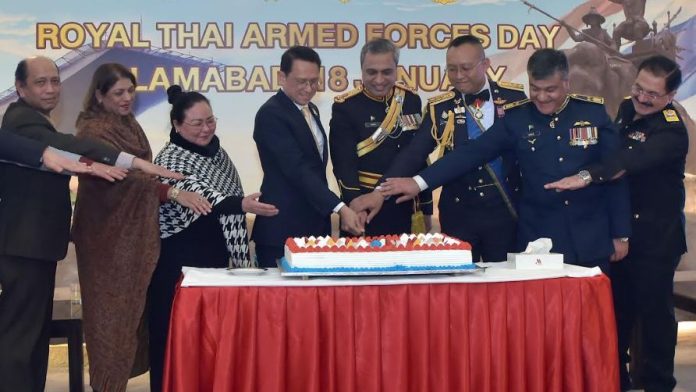
ISLAMABAD: The Ambassador of Thailand to Pakistan Chakkrid Krachaiwong has said Thailand and Pakistan have cultivated a long-standing friendship with over 70 years of our diplomatic relations and connection through Ghandhara civilization.

‘ As a major player in South Asia, Pakistan can play a crucial role in ensuring peace and security in the region amidst the current global volatility.’

The Thai Ambassador expressed these remarks while speaking on the occasion of the Thai Armed Forces Day. Lt. General Muhammad Aqeel, Inspector General Communication and Information Technology, Pakistan Army, was the chief guest. The Defence and Military Attache of Thailand Col. Thanaei Permpul also spoke on the occasion.

The ambassador further said, he would like to extend his heartfelt appreciation to all guests for honouring the occasion with their presence.

The purpose of celebration the Armed Forces Day is to recognize the bravery of men and women. These dedicated individuals, some of whom have made the supreme sacrifices deserve our most respect. It is imperative that we also recognize the families who stand as a pillar of the strength supporting their loved ones.

The ambassador said, the military and security cooperation between Thailand and Pakistan is one of the important aspects of our cooperation, contributing to the promotion of stability and security for the global community.

He thanked the defence and military attaches representing various countries who play a very important role in building trust and confidence, which is the cornerstone of the lasting peace.

 He thanked the government of Pakistan for taking care of the foreigners very well. He said that whoever he interacted expressed his or her satisfaction the way they had been accepted and facilitated in Pakistan.

He said he was optimistic that cooperation or friendly tie between the defence and military attache in Pakistan will continue to deepen and contribute to the wellbeing of the global community.

Colonel Thanaei expressed his gratitude to Lieutenant General Mohamed Aqeel, the Inspector General of Communication and Information Technology, for honoring the occasion as the chief guest. He highlighted the strategic locations of Pakistan and Thailand within the region, emphasizing the potential for leveraging this advantage. Colonel Thanaei envisioned that by harnessing this strategic positioning, the two nations could synergize their power for mutual benefit.

He also talked about various exchange programs and hoped to further cement military ties with Pakistan even in the days to come.

The Thai children also presented a spell-binding cultural performances and received huge applause from the audiences.

POL import bill declines by 13.78% in 1st half of FY 2023-24

POL import bill declines by 13.78% in 1st half of FY 2023-24

ISLAMABAD, JAN 23 (DNA) — The imports of the overall petroleum group contracted by 13.78 per cent during the first six months of the current fiscal year (2023-24) compared to the corresponding period of the last year, the Pakistan Bureau of Statistics (PBS) reported.

The total imports of the petroleum group during July-December (2023-24) stood at $ 8,005.784 million against the imports of $9,285.522 million during the same period of last year.Among petroleum commodities, the import of petroleum products declined by 24 per cent, from $ 4,202.185 million last year to $3,193,849 million during the period under review.

Likewise, the imports of Liquefied Natural Gas (LNG) declined by 4.96 per cent from $ 1,949.704 million last year to $ 1,852.996 million this year whereas petroleum crude dipped by 5.94 per cent from $ 2,776.186 million to $ 2,611.179 million.

The import of Liquefied Petroleum Gas (LPG) went down by 2.69 per cent in the first six months of the current fiscal year and stood at $347.669 million compared to $357.267 in the corresponding period in 2022.

Meanwhile, on a year-on-year basis, the petroleum group imports witnessed a decrease of 2.11 per cent during December 2023 as compared to the same month of last year, from $ 1,585.252 million to $1,551.870 million.

On a month-on-month basis, the petroleum imports into the country increased by 8.91 per cent during December 2023, compared to the imports of $1,424.903 million in November 2023, according to the PBS data. — DNA

Hungary wants increased bilateral trade ties with Pakistan

ICCI

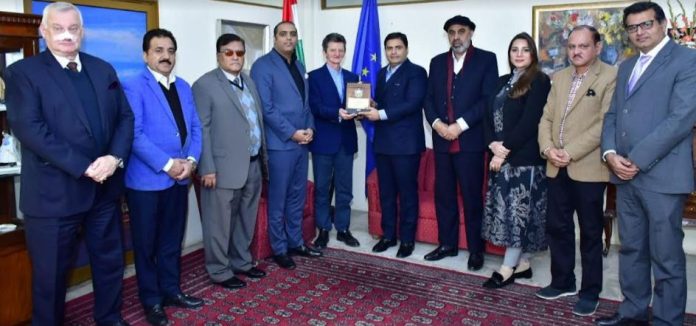
Islamabad, JAN 23 /DNA/ – Ahsan Zafar Bakhtawari, President, Islamabad Chamber of Commerce and Industry (ICCI) leading a delegation, visited the Embassy of Hungary in Islamabad and held a meeting with Bela Fazekas, Ambassador of Hungary to explore avenues for promoting bilateral trade and economic relations between Pakistan and Hungary.

Addressing the delegation, Bela Fazekas, Ambassador of Hungary welcomed the ICCI delegation and said that Hungary and Pakistan need to increase bilateral trade and economic relations to get mutual benefits. He stressed close collaboration between the national and regional chambers of commerce of both countries to explore all untapped areas for business cooperation. He said that direct B2B meetings between the private sectors of both countries can play an effective role in strengthening bilateral trade ties. He assured that his Embassy would cooperate in promoting business linkages between the two countries to further improve bilateral business and investment relations.

Speaking on the occasion, Ahsan Zafar Bakhtawari, President, Islamabad Chamber of Commerce and Industry said that bilateral trade of around US$ 80 million between Pakistan and Hungary is not reflective of their actual potential and there is a great potential to increase it. He said that both countries should develop close cooperation between their SMEs that will help boost business relations to their real potential. He said that both countries should encourage Zoom meetings between their SMEs, which will help improve bilateral trade ties.  He said that Pakistan can export many products to Hungary including pharmaceuticals, surgical instruments, sports goods, IT, and cutlery products, and stressed that Hungary should increase its imports from Pakistan to get quality products at competitive prices.

Faad Waheed, Senior Vice President, ICCI said that Pakistan and Hungary have good potential to enhance cooperation in the tourism sector and they should capitalize on this potential.

Zafar Bakhtawari, former President ICCI and Secretary General UBG Pakistan stressed reviving the Hungarian-Pakistani Friendship Association to strengthen the people-2-people and business relations. He said that both countries should establish direct air links, which are important to improve bilateral business relations. He said that regular exchange of trade delegations should be encouraged to explore new areas of trade promotion between the two countries.

Dr. Istvan GRAFJODI Commercial Counsellor of Hungary, Raja Muhammad Imtiaz, Ms. Shumaila Siddiqui, Malik Nadeem Akhtar, Tariq Jadoon and Yousaf Rajput were in the delegation. 

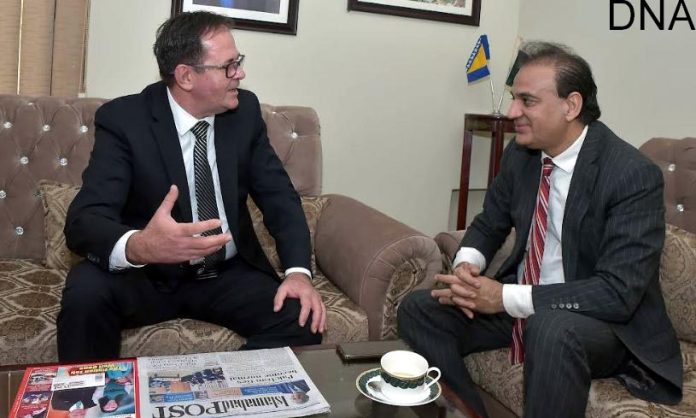
Editor Islamabad POST Ansar Bhatti meets new Bosnian envoy

Editor Islamabad POST Ansar Bhatti meets new Bosnian envoy

ISLAMABAD, JAN 23 /DNA/ – Editor Daily Islamabad POST/Centreline/DNA News Agency, Ansar Mahmood Bhatti met with the newly-arrived Ambassador of Bosnia and Herzegovina Mr. Emin Cohodarevic, at his office.

Both sides discussed matters of mutual interest. The Ambassador is keen to further strengthen bilateral relations.= DNA

APNS mourns the loss of Raja Arif, brother of Chief Editor Raja Mehtab Khan

apns

KARACHI, JAN 23 /DNA/ – “Nazafreen Saigol Lakhani, President and Sarmad Ali, Secretary General of the All Pakistan Newspapers Society have expressed profound grief on behalf of APNS Office Bearers and members of the Executive Committee over the sad demise of Raja Arif elder brother of Raja Mehtab Khan, Chief Editor, Ausaf Group of Newspapers.

The APNS offered condolence to the bereaved family and prayed that Almighty Allah rest the departed soul in eternal peace and give them courage and patience to bear the loss.

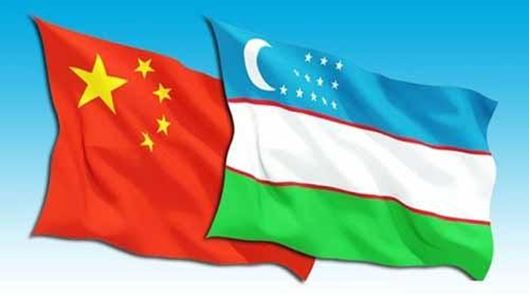
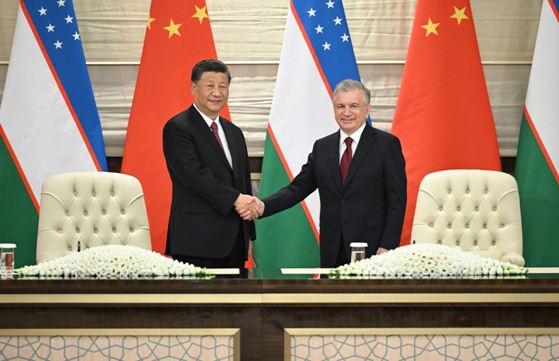
Uzbekistan-China: The centuries-old foundations of modern successful cooperation

President of Uzbekistan Shavkat Mirziyoyev

Tashkent, JAN 23 /DNA/ – President of Uzbekistan Shavkat Mirziyoyev will pay a state visit to China on 23-25 January.


The modern stage of Uzbek-Chinese cooperation began on 2 January 1992, when after gaining independence Uzbekistan established diplomatic relations with China as a full member of the international community.

The historical roots of relations between the two states go back to the depths of centuries and today are a powerful basis for the development of a mutually beneficial partnership at the present stage. The legendary Silk Road, which connected regions and promoted mutual enrichment and cultural exchange, has nowadays acquired a new meaning and continues to serve as an economic, cultural and humanitarian bridge between countries and people along its route.

The two countries are also strengthening close ties within the UN, the Shanghai Cooperation Organization, the «Central Asia-China» format and other multilateral structures, defending common interests and making a positive contribution to achieving security and progress around the world. It should also be noted here that Uzbekistan and China stood at the origins of the SCO and have always provided mutual support in the implementation of initiatives and proposals put forward by each other.

The established trusting and friendly dialogue between the leaders of the two countries plays an important role in the current development of bilateral relations between Uzbekistan and China.

Over the past seven years, President of Uzbekistan Shavkat Mirziyoyev and President of China Xi Jinping have repeatedly met at multilateral summits, reciprocal state, official and working visits of the two heads of state have taken place, and a number of telephone conversations have been held.

The state visit of President Xi Jinping to Uzbekistan in September 2022, as well as state visits to China by President Shavkat Mirziyoyev in May 2017 and 2023 have given a powerful impetus to the development of bilateral relations.

High-level bilateral interaction is also characterized by dynamic and sustainable cooperation. Inter-parliamentary cooperation has intensified. In May 2017, an inter-parliamentary group on cooperation between the Oliy Majlis and the National People’s Congress (NPC) was established. A fruitful inter-parliamentary dialogue is being maintained and a mutual exchange of visits by parliamentary delegations has been established.

Within the framework of governmental exchanges, official visits of Prime Minister Abdulla Aripov to China and Premier of the State Council of the People’s Republic of China Li Keqiang to Uzbekistan were held in 2019, as well as an online meeting of the heads of government in June 2021. In August 2022, the 6th meeting of the Uzbek-Chinese Intergovernmental Committee on Cooperation was held online.

In October 2023, Prime Minister Abdulla Aripov visited China to participate in the closing ceremony of the XIX Asian Games, during which he met with Premier of the State Council of the People’s Republic of China Li Qiang.

The mechanism of inter-ministerial political consultations has been established and is successfully functioning. A total of 17 rounds of meetings have been held in this format. Effective dialogue between the foreign ministers is also maintained within the «Central Asia-China» format.

In November 2023, the first Strategic Dialogue between the foreign ministers of the two countries was held in Beijing. On the margins of this event, a business forum was held in Guangzhou and a round table with business representatives of the two countries was held in Shanghai.

Today, China is Uzbekistan’s largest economic and trade partner. In January-November 2023, the volume of trade turnover between our countries totaled $12.2 billion, exceeding the same figure in the previous year by 34 percent.

Since 2011, within the framework of the Uzbek-Chinese Intergovernmental Committee on Cooperation, the two sides have been discussing issues of development and prospects for further expansion of practical interaction.

China is also one of Uzbekistan’s largest investors. The total volume of absorbed Chinese investments for 2017-2022 is almost $11 billion. Direct Chinese investments are working today in many sectors of our country’s economy, including chemical industry, oil and gas, construction materials, pharmaceuticals, agrarian sector, light industry and others. The number of Chinese companies involved in the implementation of major investment and infrastructure projects in the country is steadily growing. To date, 2,125 enterprises with Chinese investment are operating in Uzbekistan. In 2023, 601 new enterprises were established.

Poverty reduction is also an important area of bilateral cooperation. In this area, Uzbekistan is working closely with the Ministry of Agriculture and Rural Affairs of the People’s Republic of China. In late December, the first meeting of the subcommittee on poverty reduction within the Uzbek-Chinese Intergovernmental Cooperation Committee was held.

Visiting the Syrdarya region last April, Uzbek President Shavkat Mirziyoyev said that Syrdarya should become a “region of advanced innovations” in industry, business, agriculture, education and medicine. In this process, it was proposed to use the vast experience of China, which has made unprecedented progress in industry, agriculture, education and medicine.

In June 2023, a business forum “Syrdarya-China” was held in the city of Gulistan with the participation of 250 representatives of leading Chinese companies, including “Huawei”, “TBA”, “CC7” and others. As a result of the forum, about 30 agreements totalling $322 million were concluded.

One of the key areas of China-Uzbekistan cooperation is also transport and communications. It fully meets Uzbekistan’s interests in transforming from a “landlocked country” to a “land-linked country”, as well as the concept of China’s “One Way, One Road” initiative aimed at reviving the Great Silk Road economic way.

Thus, within the framework of this initiative, the Angren-Pap railway line with the longest tunnel in the country and Central Asia as a whole was built in Uzbekistan with the participation of Chinese partners. The China-Kyrgyzstan-Uzbekistan transport corridor is becoming an international artery crossing the mountains. All four routes of the Central Asia-China gas pipeline pass through Uzbekistan, setting a benchmark for friendly cooperation between the neighboring countries.

The role of the Great Silk Road, which has connected our regions for centuries, symbolized peace, cooperation and openness between East and West, and served mutual trade, cultural and scientific exchange. Since then, Uzbekistan and China have continued to share friendship and the richness of their cultures.

Today, young people in Uzbekistan are showing interest in learning Chinese, and the Chinese are also learning Uzbek. This promotes the exchange of knowledge and cultural ties. For example, the Confucius Institutes established at the Tashkent State University of Oriental Studies and the Samarkand State Institute of Foreign Languages have become key centers for the study of Chinese culture and language.

At the same time, there is interest in learning Uzbek in China, and it is successfully taught at institutions such as the Central University of Nationalities and the Beijing Foreign Studies University, while the Shanghai University of International Studies, one of China’s prestigious educational institutions, has a specialized chair in Uzbek. This interest is reflected in the growing number of students from China studying at Uzbek universities, which facilitates the exchange of knowledge and cultural ties between the two countries.

The «Uzbekistan-China» Friendship Society, established in 1998, also contributes to strengthening friendship and cooperation between the Uzbek and Chinese people.

On 18 May 2022, the Year of Culture and Art of the People of Central Asia and China was officially launched in Xi’an as part of the first Central Asia-China Summit. A number of cultural events, concerts and festivals, exhibitions, tour exchanges and presentations of Uzbek culture took place within the framework of this year.

Thus, in May 2023, a concert of the orchestra of the State Academic Big Theatre named A. Navoi was held at the «Beijing Opera House» in Beijing.

In September 2023, Uzbek Culture Minister OzodbekNazarbekov took part in the 6th International Silk Road Expo, which was held in the city of Dunhuang in China’s Gansu Province.

And in September 2023, the opening of the exhibition “Archaeological Cooperation –“One Way, One Road” was held in the museum of the Imperial Palace “Gugong” in Beijing, where Uzbekistan was represented by 18 exhibits from the “Golden Fund” of the country’s historical heritage.

In turn, “Days of Chinese Culture” were held in October 2023 as part of the visit to Uzbekistan by the Chinese Minister of Culture and Tourism.

Over 380 athletes from Uzbekistan successfully participated in 39 sports at the XIX Asian Games, which were held in Hangzhou from 23 September to 8 October 2023. Uzbekistan ranked fifth in the medal standings, winning 22 gold, 18 silver and 31 bronze medals.

Expansion of economic ties also contributes to the growing interest in Uzbekistan, its history and traditions in China. Thus, last year, more than 40,000 Chinese tourists visited our country.

In short, today Uzbekistan and China have reached a qualitatively new level of partnership and cooperation. According to the leading Chinese English-language newspaper «Global Times», 2023 has become a landmark year in the history of China-Uzbekistan relations. In this regard, the upcoming state visit of our head of state to China will strengthen the successes and achievements of bilateral interaction and open up further prospects of fruitful cooperation for the benefit of the people of the two countries.

«Dunyo»News Agency

Stay Connected

64FansLike
60FollowersFollow

Latest Reviews

Exchange Rates

USD - United States Dollar
EUR
1.17
GBP
1.35
AUD
0.72
CAD
0.73